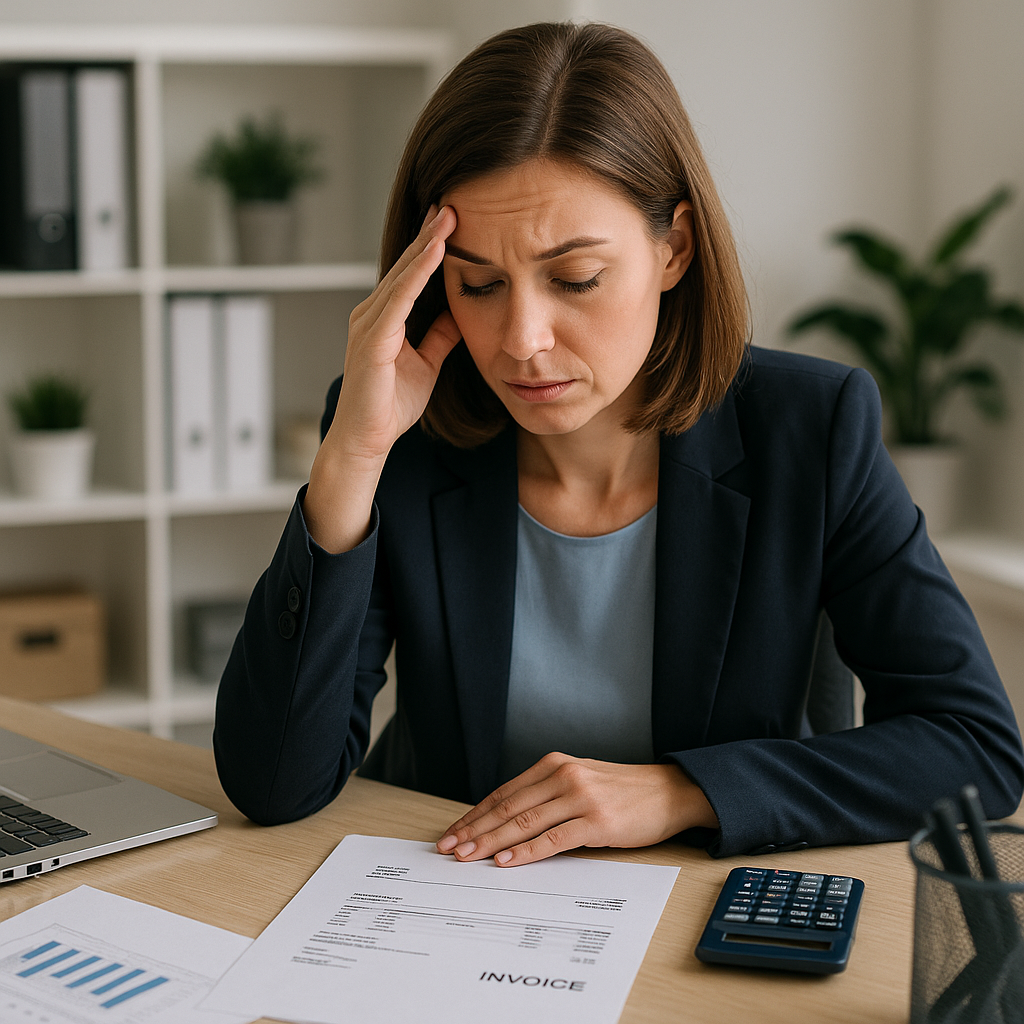
For plumbing and heating businesses across the UK, poor invoicing is not just an admin issue. It can quickly turn into a cashflow problem, a tax problem and a credibility problem.
In June, many trade firms are juggling outdoor work, holiday cover and busy summer scheduling. When the office side slips, invoicing errors often follow. That usually means delayed payments, missed revenue and more time spent chasing paperwork instead of running jobs profitably.
If you do not invoice clients properly, the impact can reach far beyond one late payment. It affects how quickly you get paid, how clearly you can track work completed and how confidently you can manage material spend, labour costs and margins.
Late Payments Start to Pile Up
The most immediate issue with poor invoicing is simple. Clients are less likely to pay quickly when an invoice is unclear, incomplete or inaccurate.
If key details are missing, such as the job address, purchase order reference, payment terms or a breakdown of materials and labour, your customer may hold the invoice back for clarification. In larger businesses, an invoice that does not match the agreed format can sit in someone’s inbox for weeks.
Common invoicing mistakes that cause delays
- Missing invoice numbers
- Incorrect client names or addresses
- No clear payment due date
- Vague descriptions of work carried out
- Material costs not broken down properly
- VAT details missing or shown incorrectly
- Wrong bank details or payment instructions
Even a small mistake can slow payment and create extra back and forth. For trade businesses already managing tight margins, that delay can put pressure on wages, supplier payments and upcoming purchases.
Cashflow Becomes Harder to Control
When invoicing is inconsistent, cashflow forecasting becomes unreliable. You may think money is due in this week, only to find several invoices are still being queried.
That matters even more during summer, when some businesses face holiday gaps in staffing or take on seasonal projects that require upfront material buying. If you are paying out for heating and plumbing materials before client payments arrive, poor invoicing can leave you funding jobs for longer than expected.
A proper invoicing process helps you:
- Send bills promptly after work is completed
- Keep records consistent across all clients
- Track what is outstanding at a glance
- Reduce disputes before they affect payment
- Protect working capital for supplier orders and payroll
For contractors and purchasing managers, better invoicing control also supports smarter cost control. When income records are accurate, it is easier to compare them against outgoing supplier costs and spot where margins are being squeezed.
You Increase the Risk of Disputes
A poorly prepared invoice gives clients more reason to question charges. That does not always mean they are trying to avoid paying. In many cases, they simply cannot verify what they are being asked to approve.
If your invoice does not clearly match the quotation, completed works or agreed rates, disputes become more likely. That creates friction, delays payment and can damage repeat business.
Why clarity matters in trade invoicing
In plumbing and heating work, clients often want to see a straightforward breakdown of:
- Labour charges
- Parts and materials used
- Quantity of items supplied
- Any agreed extras
- VAT and total payable
This level of clarity protects both sides. It helps the client understand the charge and helps your business defend the invoice if questions arise later.
Your Tax and Record-Keeping Can Suffer
Improper invoicing can also create accounting and compliance problems. If invoices are missing details or are not stored consistently, it becomes harder to keep clean records for VAT, year-end accounts and internal reporting.
That can lead to wasted time during tax preparation, more work for your accountant and a greater chance of errors in your books. For growing businesses, weak invoice discipline also makes it harder to understand which jobs, clients or service types are actually profitable.
This is where stronger systems matter. A business that invoices well is usually better at tracking supplier costs, reviewing gross profit and making informed buying decisions.
For example, if your incoming invoices are tidy but your material purchasing is not, you may still be losing margin through overpayment. Using tools that improve price transparency on heating and plumbing materials can help you control both sides of the equation, money in and money out.
Your Professional Reputation Takes a Hit
Clients notice poor paperwork. An invoice with missing details, wrong totals or inconsistent formatting can make even good workmanship look less professional.
For small trade businesses, presentation matters. A clear and accurate invoice shows that your business is organised, reliable and easy to work with. That can influence whether a customer pays promptly, recommends you or books you again.
This is especially important when dealing with commercial clients, contractors or facilities teams, where admin standards are often tighter than in domestic work.
How to Avoid Invoicing Problems
Getting invoicing right does not need to be complicated. The key is consistency, speed and clear information.
Here are a few practical ways to tighten up your process:
Build a repeatable invoicing routine
Create a standard format for every invoice you send. Include job details, dates, payment terms, VAT information and a clear breakdown of costs.
Send invoices promptly
Do not leave billing until the end of the week or month if the job has already been completed. Faster invoicing usually means faster payment.
Keep materials and purchasing records organised
Accurate purchase records make your invoicing stronger and help you justify charges. They also support margin checks and better cost comparison for future buying.
Review where margin is leaking
If your invoicing is improving but profits still feel tight, the issue may be supplier pricing rather than billing. That is where tools like Assured Bills for smarter trade purchasing can support better cost control.
Make systems easy for your team
If multiple people handle admin, use a shared process that reduces errors during holiday cover and busy periods.
Better Invoicing Supports Better Business Control
If you do not invoice clients properly, you risk slower payments, weaker cashflow, more disputes and unnecessary pressure on your accounts. For UK plumbing and heating businesses, that can quickly reduce control at exactly the point you need it most.
Strong invoicing is not only about getting paid. It is part of running a tighter operation, protecting margin and making better commercial decisions across the business.
If you also want to stop overpaying for materials and improve purchasing visibility, explore Assured Bills. Assured Bills helps trade businesses take greater control of costs, save time and protect profit where it matters most.