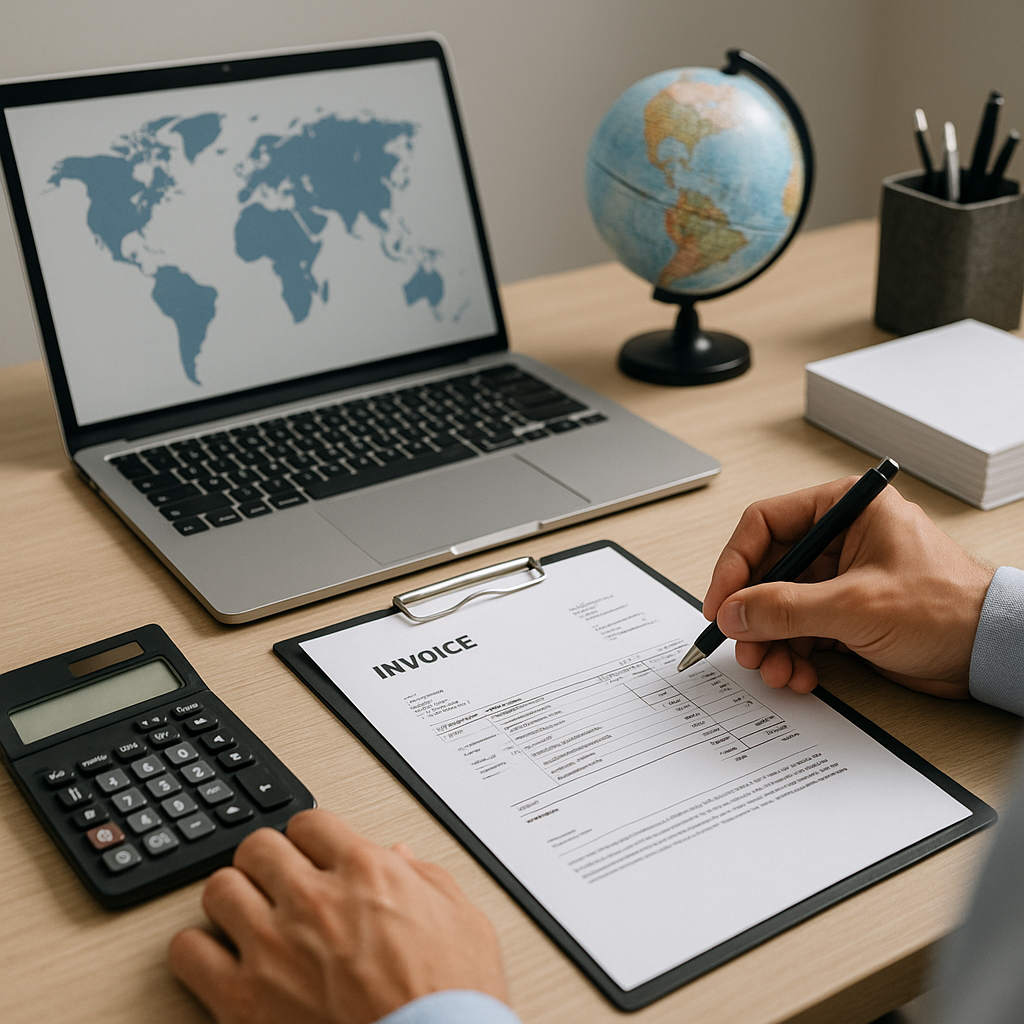
Winning work outside your local area is good for growth, but invoicing clients in different countries can quickly become messy if your process is not clear. For UK contractors, trade businesses and service firms, the challenge is not just sending a bill. It is making sure your pricing, tax treatment, payment terms and supporting records are consistent and easy to check.
If you work with overseas customers, or even clients operating across multiple regions, a stronger invoicing process protects cashflow and reduces avoidable admin. It also gives you better control over supplier costs, which matters even more in summer when workloads, holiday cover and material purchasing can put extra pressure on margins.
Start with a clear invoicing framework
Before you send an invoice abroad, set a standard process for every job. This helps your team work faster and reduces disputes.
Your framework should cover:
- The legal business name and address for both parties
- A unique invoice number
- The invoice date and payment due date
- A clear description of labour, materials or contracted services
- Quantities, unit prices and totals
- The currency being used
- Any tax details that apply
- Bank payment information and preferred payment method
- Your terms for late payment
For trade businesses buying and supplying heating and plumbing materials, clarity matters. If materials, delivery charges and labour are grouped too loosely, clients can challenge the bill and your team can lose time answering avoidable queries.
Use the right currency and payment terms
One of the most common problems with invoicing clients in different countries is confusion over currency. Never assume the client knows whether your figures are in pounds, euros or dollars. State the currency clearly on the invoice and in the quote before work starts.
Reduce payment friction
If your client is based overseas, make it as easy as possible for them to pay. Include:
- The accepted payment methods
- International bank details where needed
- The payment deadline in calendar days
- Any agreed deposit or stage payment structure
It is also worth deciding who carries any bank transfer fees. If this is not agreed in advance, your final payment can arrive short.
Keep exchange rate issues in mind
If your costs are in sterling but your invoice is paid in another currency, exchange movements can affect margin. That is especially important for plumbing and heating firms sourcing materials at changing trade prices. Tight control over procurement and price transparency can help offset this risk by reducing overpayment on the supply side.
Check tax and VAT treatment carefully
When invoicing clients in different countries, tax treatment can vary depending on where the client is based and what you are supplying. This is an area where many businesses need professional advice, especially for regular overseas work.
As a general rule, you should confirm:
- Whether UK VAT applies
- Whether the customer is a business or end consumer
- Whether local tax rules affect the invoice wording
- What records you need to retain for compliance
Because rules can differ by country and service type, it is sensible to confirm the position with your accountant before setting up a repeated billing process. A small error repeated across dozens of invoices can become a larger problem later.
Make line items detailed and easy to verify
Clients in another country may not know your standard product ranges, trade terms or abbreviations. So your invoice should be easy for someone outside your usual market to understand.
What to include on material-heavy invoices
If your work includes purchased items, list them in a way that supports approval and payment:
- Product description
- Quantity supplied
- Unit cost
- Mark-up or agreed sale price where relevant
- Delivery charges
- Any returns, credits or substitutions
This level of detail is also valuable internally. It helps you compare supplier prices, spot inconsistencies and improve cost control on future jobs. For firms that regularly source heating and plumbing supplies for professionals, this is where smart purchasing processes can protect profit.
Standardise documents across borders
A good cross-border invoice is usually backed by a good pre-invoice process. That means your quote, purchase records and client approval trail should all match the final bill.
Useful documents to keep include:
- Signed quotations or work approvals
- Purchase orders
- Delivery confirmations
- Material cost records
- Correspondence about pricing changes
- Proof of completed work
This is particularly useful during busy summer trading in the UK, when teams may be juggling outdoor jobs, annual leave and fast-turnaround orders. Standardisation reduces errors when staff cover for one another.
Use technology to improve accuracy
Manual checking can slow everything down, especially when invoices include multiple currencies, supplier costs and material lines. Digital tools can help you tighten the process.
For example, if your business also needs better visibility over what you are being charged by merchants and suppliers, Assured Bills helps trade businesses avoid overpaying for heating and plumbing materials. Better invoice control on both sales and purchasing sides creates a stronger overall system.
If you are ready to get started, you can create an account with Assured Bills and build a more reliable approach to checking material costs. Existing users can log in to the Assured Bills platform to review current invoice data.
Best practice for UK businesses billing overseas
If you want a practical approach, focus on these five habits:
- Agree currency, payment terms and tax position before work starts.
- Keep invoice wording clear and consistent.
- Separate labour, materials and extra charges properly.
- Retain supporting records for every invoice.
- Review supplier and material costs regularly to protect margin.
For UK trade firms, overseas billing should not mean losing control. A clear invoicing process, backed by better purchasing visibility, helps you get paid faster and stop hidden costs eating into profit.
Final thought
Invoicing clients in different countries is easier when your process is structured from the start. Clear currency, accurate tax handling, transparent line items and reliable records all help reduce friction and improve cashflow.
If you want tighter control over material pricing and fewer costly surprises in your procurement process, Assured Bills can help you bring more visibility to every invoice and order.