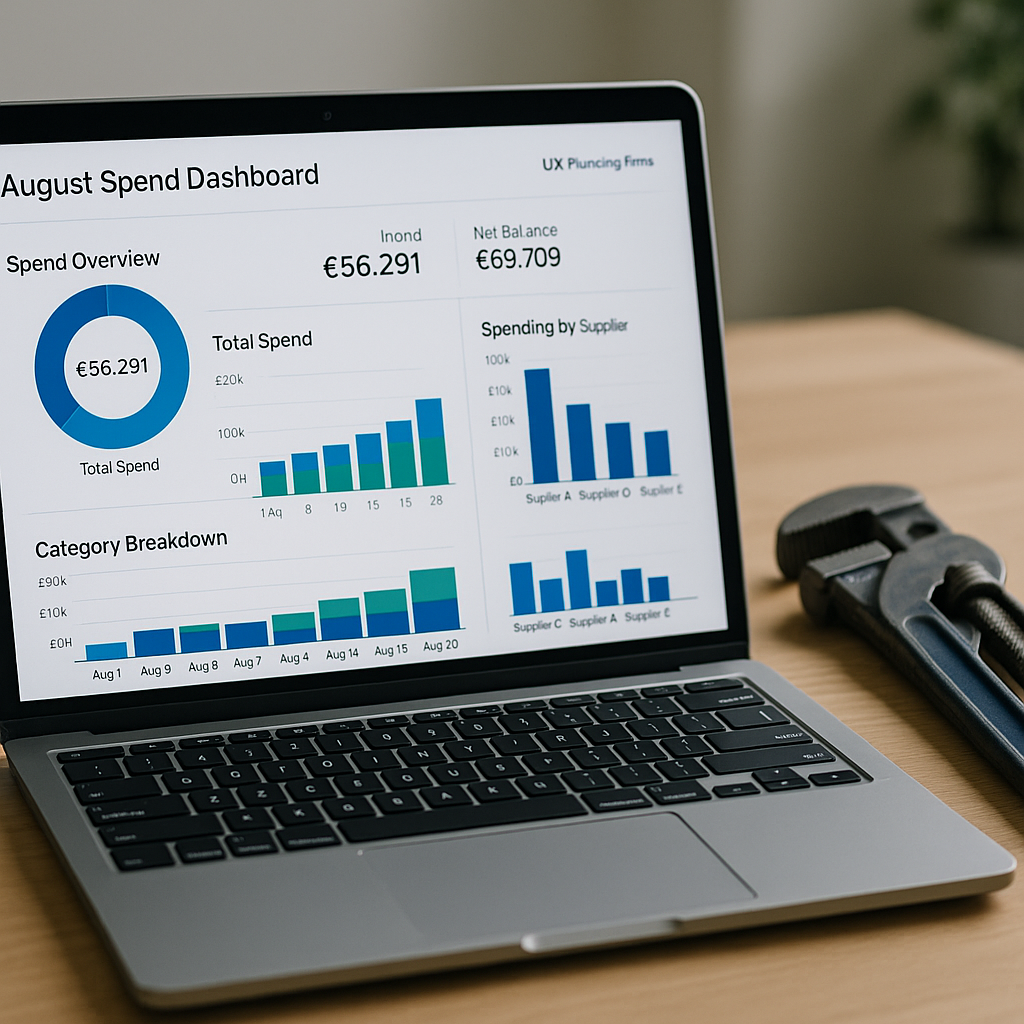
August can be a messy month for trade businesses. Projects keep moving, outdoor work stays busy, and holiday cover can leave purchasing split across several people. For plumbing and heating firms across the UK, that often means one thing, less visibility on what is being bought, from whom, and at what price.
A simple spend dashboard helps bring control back quickly. It gives owners, buyers and office teams a clear view of material purchasing without waiting until month end. If you want better margins, stronger price transparency and fewer nasty surprises, this is one of the most practical upgrades you can make.
For firms using tools like Assured Bills, the aim is straightforward, stop overpaying for heating and plumbing materials and make faster buying decisions with confidence.
Why August is the right time to tighten visibility
In summer, many UK trade businesses face a specific mix of challenges:
- holiday cover means more people may place orders
- urgent site needs can lead to quick buys without price checking
- outdoor and refurbishment work can increase material movement
- office teams may have less time to manually review supplier paperwork
- cooling costs and general overheads can put extra pressure on cash margin
A spend dashboard does not replace your accounting system. It gives you a practical layer of control over procurement and supplier costs, especially when the month is busy.
What a useful spend dashboard should show
The best dashboards are not overloaded with data. They focus on the figures that help you take action.
1. Spend by supplier
This shows where your money is going right now. If one merchant or supplier is taking a larger share than expected, it is easier to question whether pricing still stacks up.
2. Spend by product category
Split purchasing into areas such as boilers, pipework, valves, fittings, controls or consumables. This makes it easier to spot categories where costs are creeping up.
3. Average price paid over time
A trend line matters. If the average price paid for common heating and plumbing supplies is edging upward, you can investigate before that drift damages margin across multiple jobs.
4. Order frequency and value
Lots of small orders often create hidden inefficiency. Tracking frequency helps you see whether poor planning or fragmented buying is pushing up overall cost.
5. Exceptions and anomalies
This is where real savings often sit. A good dashboard should help flag unusual prices, duplicate line items, unexpected charges or inconsistent buying across the team.
The commercial benefits for trade businesses
A dashboard is not just a reporting exercise. It supports better decisions on live purchasing.
Faster cost comparison
When teams can see recent prices clearly, it becomes easier to compare material costs across suppliers and avoid paying more than necessary. That is especially useful in August, when cover staff may not know your usual benchmark prices.
Better margin protection
Even small price differences across regular purchases add up quickly. Better visibility supports stronger control over trade procurement and helps preserve profit on every job.
Improved supplier conversations
Clear numbers make negotiations easier. If you know your actual spend, buying pattern and average rates, you are in a stronger position to ask for better terms or challenge inconsistent pricing.
Less admin pressure
Instead of pulling figures from emails, invoices and statements manually, your team can work from one view. That saves time and reduces reliance on memory or guesswork.
How to build a simple dashboard without overcomplicating it
You do not need a huge system change to make this work. Start with a straightforward structure.
- list your top suppliers for heating and plumbing materials
- group your most common purchases into clear categories
- track weekly spend rather than waiting until the month closes
- record unit prices on high-volume items you buy regularly
- flag any purchases that sit outside normal ranges
- review the dashboard with the person responsible for buying
If you are growing, the next step is using smarter purchasing tools that automate invoice checking and highlight pricing issues earlier.
Common warning signs your business needs this now
Many firms only improve reporting after profit starts slipping. In practice, the signs usually appear earlier.
You may need an August spend dashboard if:
- different team members order similar materials at different prices
- you cannot quickly name your top three suppliers by monthly spend
- urgent buys happen regularly without any benchmark check
- supplier costs feel higher, but you cannot prove where the rise sits
- office staff spend too long reviewing paperwork manually
- margin on jobs looks fine at quote stage but weaker at completion
These are not unusual problems. They are common in busy trade businesses, especially when purchasing is spread across vans, sites and the office.
Why this matters before autumn demand picks up
August is a smart point to fix visibility because autumn usually brings a fresh wave of heating work. If you enter that period without clear purchasing data, overpayment can scale fast.
Putting a dashboard in place now helps you:
- set better internal buying controls
- standardise supplier use where it makes sense
- improve price transparency before seasonal demand increases
- save time on sourcing materials across repeat jobs
- create a stronger baseline for September and October buying
For businesses that want tighter procurement control, Assured Bills is built to help trade professionals avoid overpaying and improve confidence in supplier pricing. If you are ready to put better checks around material buying, you can also create an account and start bringing more control to your purchasing process.
Final thought
You do not need more paperwork this August. You need clearer visibility. A practical spend dashboard gives plumbing and heating firms a sharper grip on supplier costs, buying habits and hidden margin leaks.
If your business wants to cut wasteful spending and make smarter buying decisions, Assured Bills can help you take control of material costs with less manual effort.