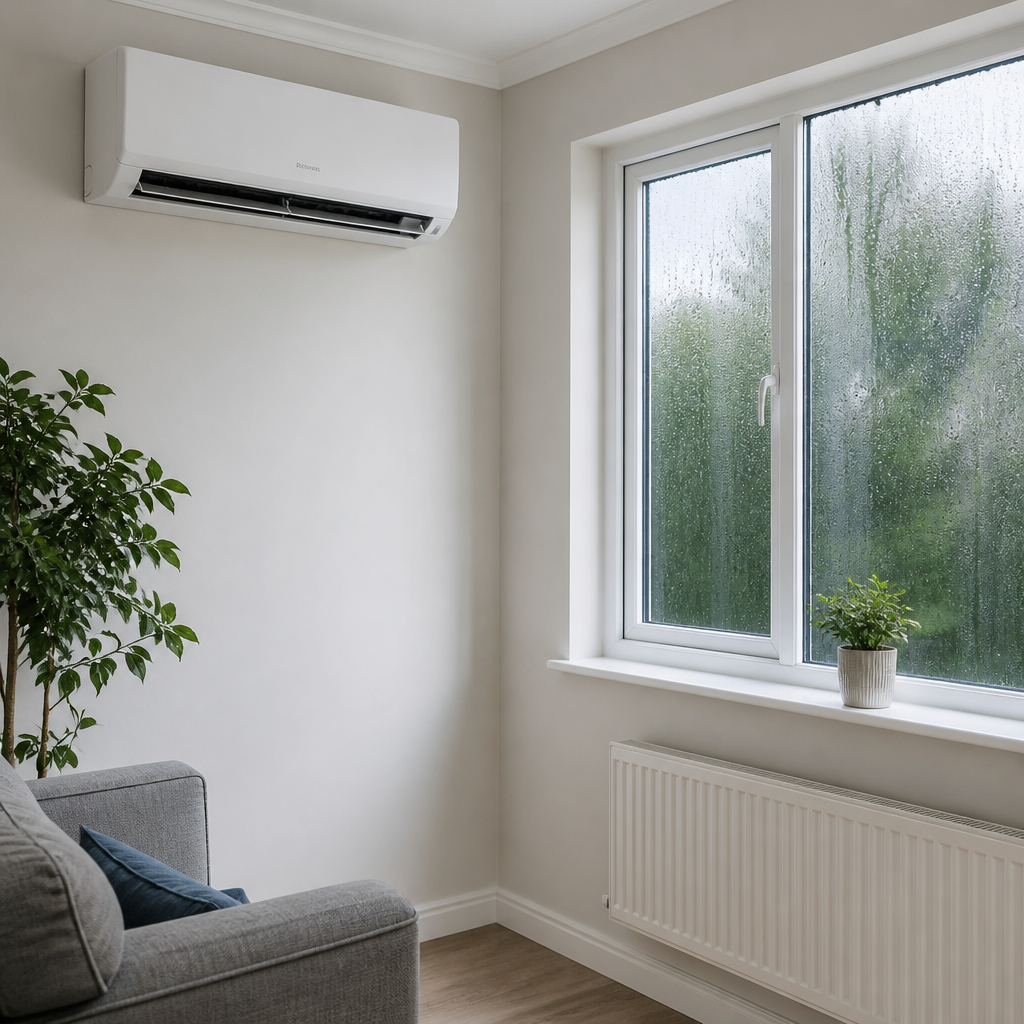
As November settles in across Chelmsford and the wider Essex area, many homeowners start noticing a familiar problem. Bedrooms feel clammy in the morning, garden rooms stay cold and damp, and condensation begins to appear on windows. If left unchecked, that excess moisture can make a room feel uncomfortable and may contribute to musty smells and poor indoor air quality.
A common question at this time of year is whether air conditioning can help with damp problems. In many homes, the answer is yes, particularly when the issue is linked to everyday moisture build-up rather than a structural fault.
For homeowners looking into damp room air conditioning in Essex, it helps to understand what air conditioning can do, where it works best, and why professional installation matters.
Why rooms feel damp in November
Autumn and early winter often create the perfect conditions for condensation and moisture build-up indoors. Homes are more likely to have windows shut, washing dried inside, and less natural ventilation. Add cooking, showers and cooler outdoor temperatures, and humidity levels can quickly rise.
Rooms commonly affected include:
- Bedrooms with limited airflow
- Garden rooms and home offices
- Loft conversions
- Conservatories used through the colder months
- Small offices, salons and treatment rooms
When warm indoor air meets colder surfaces, moisture turns into condensation. That is why you often see water on windows or notice a stale, damp feel in certain rooms.
How air conditioning helps reduce indoor moisture
Air conditioning does more than cool a room in summer. A properly specified system can also help regulate humidity, which is one reason many Essex homeowners now see it as a year-round comfort solution.
As air passes through the indoor unit, moisture is removed from the air during operation. This can help create a fresher, drier and more comfortable environment, especially in rooms that tend to feel stuffy or clammy.
Where it can make the biggest difference
Air conditioning is often especially useful in spaces where moisture builds up regularly but where full-house ventilation changes are not practical. Examples include:
- Garden rooms used as offices or gyms
- Bedrooms that feel heavy or damp overnight
- Home extensions with lots of glazing
- Small commercial premises such as salons or treatment rooms
In these settings, better climate control can improve comfort while also helping protect furnishings, décor and electronics from excessive moisture.
What air conditioning cannot fix
It is important to be realistic. Air conditioning can help manage airborne moisture, but it will not solve every damp issue.
If a room has penetrating damp, leaking pipework, failed seals, or insulation problems, those faults need to be dealt with directly. A professional assessment helps identify whether the problem is mainly humidity-related or whether there is an underlying building issue that needs separate attention.
Is it a cheap-to-run option for homeowners?
Many people still assume air conditioning is expensive to operate, but modern systems are far more efficient than older units. When correctly sized for the room and used sensibly, they can be a practical and cheap-to-run way to improve comfort through more than one season.
This matters in Essex homes where one room may be too warm in summer, then too damp in late autumn. Instead of using separate appliances for cooling and moisture control, one well-chosen system can often handle both more effectively.
Authorised installers such as Assured Cooling Essex fit reliable systems from trusted manufacturers including Midea and Bosch, helping homeowners choose equipment designed for efficient everyday use.
Choosing the right system for a damp-prone room
The best setup depends on the room, how often it is used, and how moisture builds up in that space. A bedroom has different needs from a garden room or small shop.
A professional installer will usually consider:
- Room size and layout
- Insulation and glazing levels
- How much sunlight the room gets
- Whether the space is used daily or occasionally
- General ventilation and moisture levels
Getting the right specification is key. An oversized or poorly placed unit will not deliver the same results as a properly designed system installed by an experienced F-Gas compliant engineer.
If you are comparing options, take a look at our new air conditioning installations and the range of air conditioning products we install.
Why November is a sensible time to act
For many Chelmsford homeowners, November is when moisture problems become more noticeable. It is also a practical time to sort the issue before the coldest part of winter arrives.
Installing or upgrading a system now can help you:
- improve comfort before Christmas
- reduce that damp, stale feel in problem rooms
- prepare guest rooms or workspaces for winter use
- support cleaner, more balanced indoor air
It can also be a quieter time to plan home improvements before the spring rush.
Don’t forget servicing and checks
If you already have a system in place, seasonal maintenance still matters. A unit that is overdue a clean or check may not manage airflow and moisture as effectively as it should.
Routine servicing helps keep the system efficient, hygienic and dependable during periods of regular use. You can learn more about air conditioning maintenance and servicing if your current unit needs attention.
A practical solution for year-round comfort
Not every damp room needs major building work. In many Essex homes, the problem is excess humidity combined with poor airflow, and that is where well-designed air conditioning can make a real difference.
If you are dealing with a clammy bedroom, a damp garden room or a home workspace that never quite feels comfortable, Assured Cooling Essex can help you find a practical solution that suits the space. Contact the team to arrange advice on installation, servicing or repairs across Chelmsford and the surrounding areas.