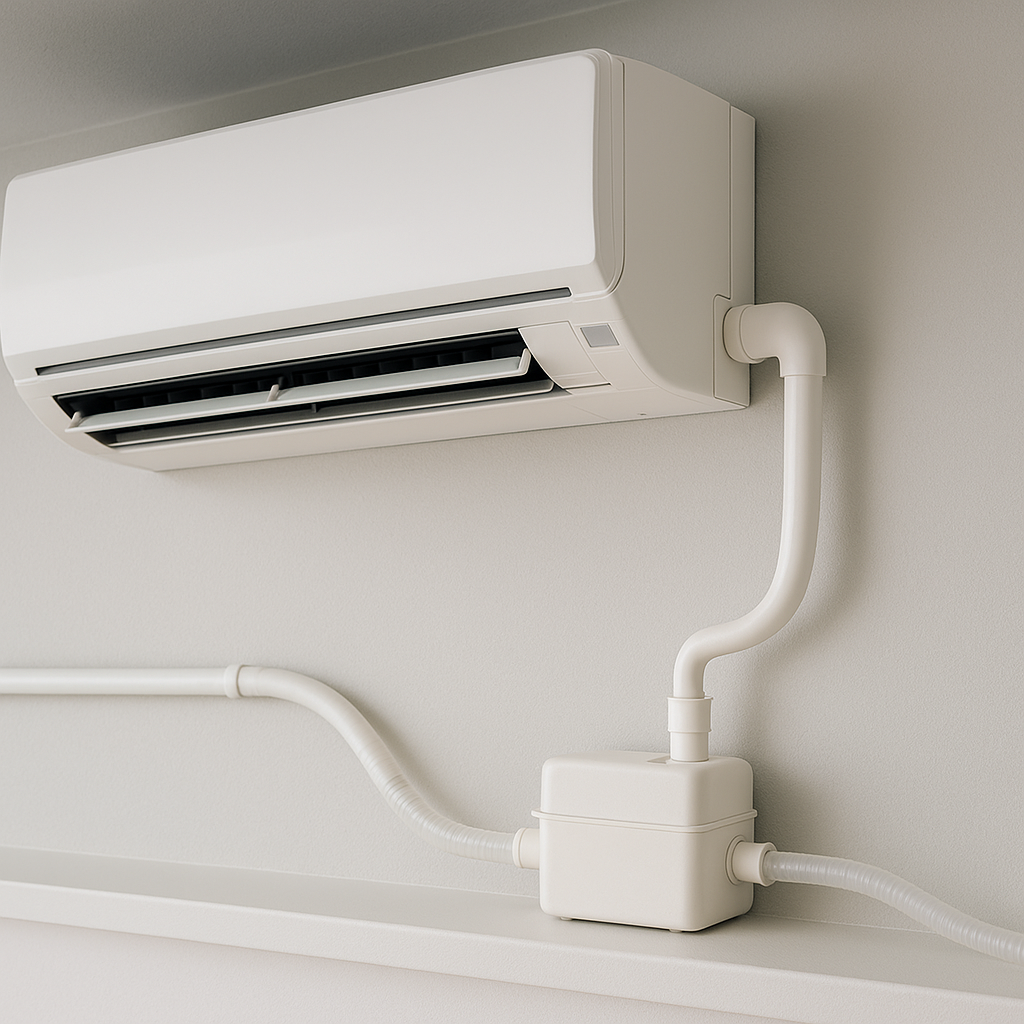
In July, when homes and small businesses across Chelmsford are relying on air conditioning more often, one part of the system that is easy to overlook is condensate drainage. Every working air conditioning unit removes moisture from the air, and that water needs to go somewhere safely.
If drainage is not planned properly, it can lead to leaks, staining, unwanted odours and disruption inside the property. For homeowners and business owners in Essex, understanding the basics of gravity drainage, condensate pumps and external run-off can help you make better decisions when choosing a system.
At Assured Cooling Essex, condensate drainage is treated as an important part of every installation, not an afterthought. A well-installed system should be tidy, reliable and suited to the layout of the building.
Why condensate drainage matters
When your air conditioning cools a room, it also removes humidity from the air. That moisture collects inside the indoor unit as condensate, then flows away through a drain.
In warm, humid spells, which are common during an Essex summer, the amount of water produced can be greater than many people expect. That is why proper drainage design matters just as much as the unit itself.
Good condensate drainage helps to:
- prevent water leaks indoors
- protect walls, ceilings and flooring
- reduce the risk of musty smells
- keep the system operating efficiently
- avoid nuisance shutdowns caused by drainage faults
This is especially important in bedrooms, loft conversions, garden rooms, salons, offices and shop units, where a water issue can quickly become inconvenient.
The three main ways condensate is drained
The right approach depends on where the indoor unit is located and how easily the water can be taken outside or to a suitable waste point.
1. Gravity drainage
Gravity drainage is usually the simplest option. The drain pipe is installed with a continuous fall so the condensate can flow away naturally.
This is often the preferred solution because it has fewer moving parts and tends to be very reliable when installed correctly. If the indoor unit is on an external wall, or there is a straightforward route to an appropriate drain point, gravity drainage can work very well.
A properly designed gravity drain should:
- maintain a steady downward fall
- avoid dips where water can collect
- be routed neatly and discreetly
- discharge to a suitable location
For many domestic installations, gravity drainage is the cleanest and lowest-maintenance choice. It also supports air conditioning efficiency in Chelmsford properties because the system is less likely to suffer interruptions caused by blocked or struggling drainage arrangements.
2. Condensate pump drainage
A condensate pump is used when gravity drainage is not practical. This is common where the indoor unit is positioned away from an external wall, where pipework has to travel upwards for part of the route, or where the building layout limits natural fall.
The pump collects condensate and then pushes it to the discharge point.
This option can be very useful in:
- offices with internal rooms
- salons or shops in fitted commercial spaces
- home extensions
- loft rooms
- properties where aesthetics limit visible pipe runs
A good pump installation needs careful planning. The pump should be correctly sized, installed in an accessible position and selected with noise levels in mind. In quiet areas such as bedrooms or meeting rooms, this matters even more.
While pumps are highly effective, they do introduce an additional component that may need periodic checks during servicing. That is one reason routine visits, such as those covered in our maintenance servicing, are worthwhile.
3. External run-off
External run-off usually means routing the condensate drain outside the building to a suitable discharge point. This can be done as part of a gravity drain or with the help of a pump, depending on the route.
The key point is that the water must be discharged safely and tidily. It should not create a slip risk, drip constantly in an awkward place, or affect neighbouring areas.
A proper external run-off arrangement should consider:
- the appearance of pipework on the outside wall
- the length of the drain run
- how exposed the pipe is to weather
- a sensible termination point
- compliance with good installation practice
In homes across Essex, customers often want cooling that is cheap to run and discreet in appearance. Drain routing plays a part in that overall result, because a neat installation is about more than just the indoor unit on the wall.
Which drainage method is best?
There is no one-size-fits-all answer. The best option depends on the room, the position of the unit and the route available for pipework.
In general:
- Gravity drainage is often best where a natural fall is easy to achieve.
- A condensate pump is useful where the layout makes gravity drainage difficult.
- External run-off works well when the discharge point can be reached safely and neatly.
During a survey, a professional installer should assess the room layout, the wall positions, pipe run lengths and the most practical discharge route. This helps avoid problems later.
If you are considering a new air conditioning installation, drainage should always be part of that early discussion, especially in converted spaces and commercial premises.
Common drainage problems to avoid
Poor condensate drainage can cause issues even when the air conditioning unit itself is good quality. Some of the more common faults include:
- drain pipes with no proper fall
- blocked or kinked pipework
- badly positioned external discharge points
- pumps installed without easy access for servicing
- visible pipework that spoils the finish of the room
These issues are avoidable with careful design and tidy workmanship. As authorised installers for Midea and Bosch, Assured Cooling Essex focuses on the complete installation, including the practical details that affect long-term reliability.
Why professional installation matters
Condensate drainage is not something to guess or improvise. It needs to be planned alongside refrigerant pipework, unit position and the overall layout of the property. For domestic and commercial air conditioning in Essex, this is especially important in summer, when systems are working harder and producing more condensate.
A professionally installed system should be efficient, dependable and unobtrusive. For eligible customers, VAT-free air conditioning in Essex may also be worth asking about when planning domestic works, particularly if energy-efficient cooling is a priority.
If you want advice on the best drainage arrangement for your property, or you are dealing with leaks or drainage faults, take a look at our air conditioning services in Essex or contact Assured Cooling Essex. We are happy to help homeowners and businesses in Chelmsford and across Essex choose a practical, reliable solution.