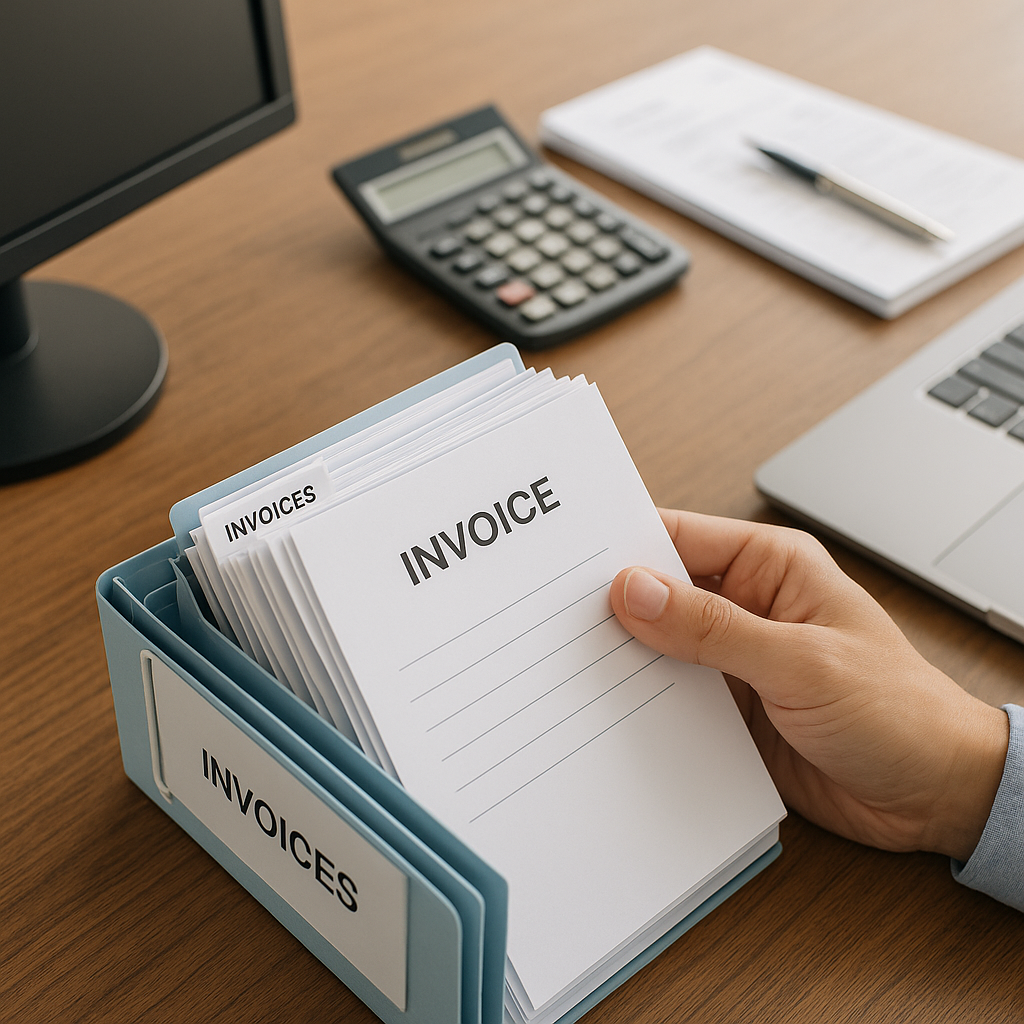
When tax time comes around, many business owners find themselves searching through emails, paper files and accounting folders to track down the right paperwork. If you have ever wondered, how do I organise invoices for tax time, the good news is that it does not need to be complicated.
A clear system helps you stay on top of supplier bills, avoid missed payments, support accurate bookkeeping and make it much easier to prepare for your accountant or year-end review. For businesses in Essex and across the UK, May is a useful time to get organised. Spring often brings a fresh look at budgets, seasonal projects and supplier costs, making it the ideal moment to tidy up your invoice records before they become a bigger job.
Why invoice organisation matters
Organising invoices is not just about keeping things neat. It helps your business:
- find records quickly when needed
- support accurate tax reporting
- track spending across suppliers
- spot unusual charges or price increases
- avoid duplicate or late payments
- improve budgeting and cashflow planning
When invoices are stored properly, you can see what has been paid, what is due and what needs checking. That visibility is especially important if your business handles regular supplier purchases, utilities, materials or maintenance costs.
For many business owners, the real challenge is not receiving invoices. It is making sure they are filed consistently and reviewed properly.
Start with one simple invoice system
If your invoices currently live in several places, the first step is to create one reliable process.
Choose a central storage location
Use one main place for all invoices, whether that is a secure cloud folder, accounting software or a bill management platform. The key is consistency. Every invoice should be saved in the same place as soon as it arrives.
If you receive a mix of PDF invoices, email attachments and paper bills, convert them into a digital format where possible. This makes them easier to search, sort and share at tax time.
Organise by supplier and date
A practical folder structure might include:
- year
- month
- supplier name
- paid or unpaid status
For example, you could file invoices under folders such as "2026 > May > Supplier Name > Paid". This makes it easier to track records over time and gives you a cleaner audit trail.
Use file names that are easy to recognise, such as:
Supplier-name_invoice-number_date_amount
That small step can save a lot of time later.
What information should you keep?
To prepare properly for tax time, each invoice record should include more than just the bill itself. Keep the following wherever possible:
- the original invoice
- the invoice date
- supplier name and contact details
- description of goods or services
- payment due date
- proof of payment
- notes on any disputes, credits or corrections
This helps if you need to check whether a bill has already been paid, explain a cost to your accountant or confirm why a payment amount changed.
It is also wise to separate purchase invoices from sales invoices, so outgoing supplier costs do not get mixed up with money owed to your business.
Use reminders to avoid a last-minute rush
One of the most common problems at tax time is having a backlog of uncategorised invoices. A simple monthly routine can prevent this.
Set aside time each month to:
- upload new invoices
- check that supplier details are correct
- mark paid and unpaid items
- match invoices against bank payments
- flag anything unusual for review
Bill payment reminders can be especially helpful here. They reduce the risk of late fees and help keep your records current throughout the year, rather than leaving everything until the last minute.
If your business manages multiple recurring bills, automated payments can also support a more orderly process, as long as each payment is still checked and recorded properly. This can make financial organisation much easier, especially during busy periods.
Check invoices before filing them away
A common mistake is assuming every invoice is correct just because it has arrived from a familiar supplier. In reality, even regular bills can contain pricing changes, duplicate charges or quantity errors.
Before you file an invoice for tax time, review:
Pricing and quantities
Check that the rates, materials or service charges match what you expected. This is particularly relevant in spring, when many Essex businesses begin seasonal work, site improvements or maintenance after winter.
VAT details and supplier information
Make sure the invoice includes the right business details and any relevant VAT information. Incomplete paperwork can create delays later when you are preparing records.
Payment status
Confirm whether the invoice has been paid, is due soon or needs further approval. Clear status tracking supports both tax preparation and cashflow planning.
This is where technology can make a real difference. Assured Bills helps businesses review supplier invoices more efficiently, reducing the need for manual checking and helping owners stay in control of their costs.
Make tax time easier with digital tools
If you want to know how do I organise invoices for tax time without creating extra admin, digital tools are often the best answer. The right system can help you:
- consolidate invoices in one place
- track payment deadlines
- maintain a clear payment history
- support budgeting across monthly expenses
- integrate with bank records and business payment information
- improve visibility over supplier charges
For businesses looking to simplify the process, our services for bill and invoice management can help create a more reliable and efficient workflow.
Using secure online systems also supports safer record keeping, which is increasingly important for businesses handling sensitive financial data.
A practical invoice checklist for tax time
If you are getting organised now, use this quick checklist:
- gather all invoices from email, paper files and shared folders
- save them in one secure digital location
- sort them by date and supplier
- check each invoice for accuracy
- match invoices to payments
- separate paid, unpaid and disputed items
- keep proof of payment alongside the invoice
- review monthly so records stay up to date
This process does not need to be perfect from day one. What matters is building a system you can maintain consistently.
Stay ready all year, not just at tax time
The best way to reduce stress at tax time is to stay organised throughout the year. With regular invoice checks, payment reminders and a clear filing process, you can avoid the usual scramble and make better day-to-day decisions about spending.
If you would like support with managing supplier invoices more efficiently, explore our contact page or learn more about Assured Bills and how we help business owners keep bills organised, checked and under control.