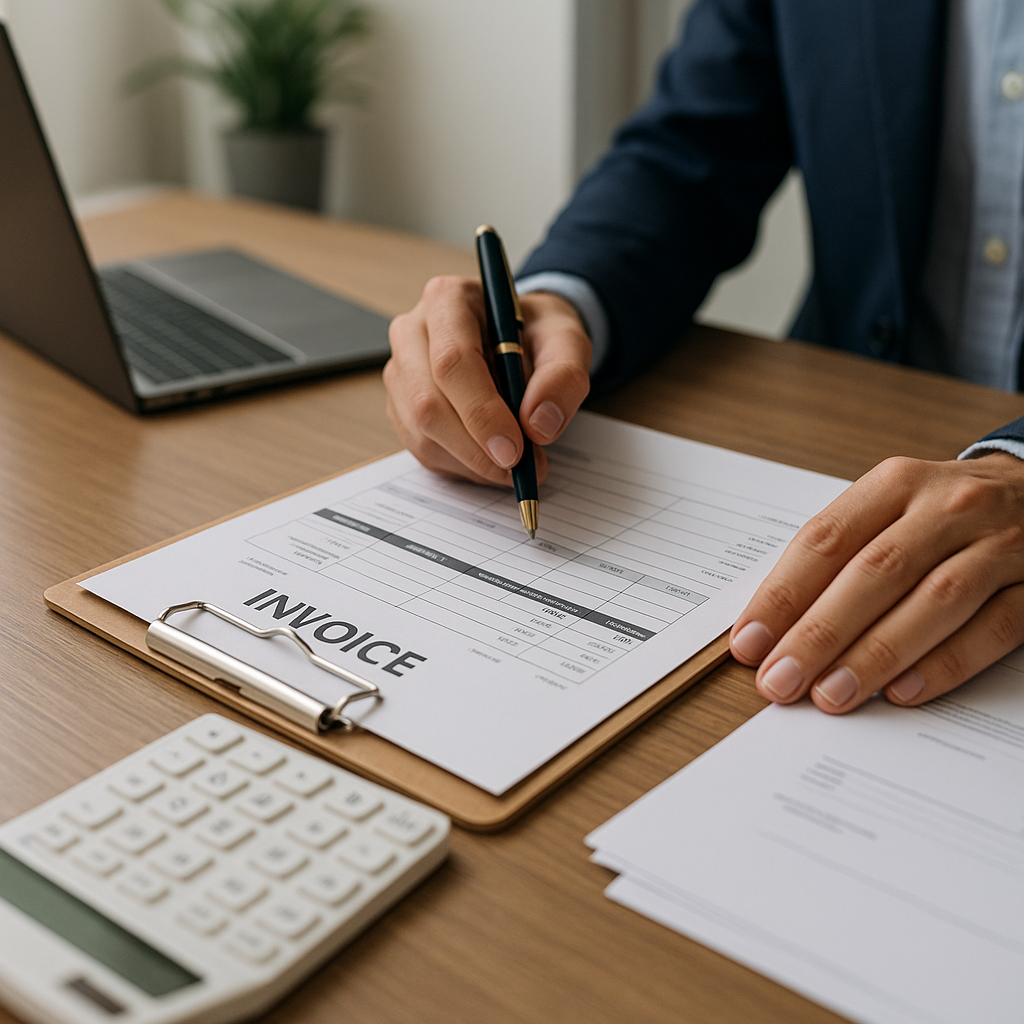
Sending a clear, accurate invoice helps you get paid on time, keep your records organised and reduce unnecessary questions from customers. For business owners, a well-prepared invoice is also an important part of cashflow planning, especially in May when many firms in Essex are reviewing costs, taking on seasonal work and trying to stay on top of monthly outgoings.
If you have ever wondered what should I include on my invoices, the answer is simple: enough detail to make payment straightforward, while keeping everything professional and easy to understand.
The essential details every invoice should have
A professional invoice should include the key information a customer needs to identify the work, check the amount due and pay without delay. In most cases, your invoice should contain:
- Your business name, address and contact details
- Your customer’s name and address
- A unique invoice number
- The invoice date
- A clear description of the goods or services provided
- The quantity, rate or unit price
- The subtotal before any tax
- VAT details, if you are VAT registered
- The total amount due
- The payment due date
- Your payment details, such as bank transfer information
These points form the basis of a strong invoice and help avoid confusion. If customers need to chase for missing details, payment can easily be delayed.
Why clear invoices matter for cashflow
A good invoice does more than request payment. It supports day-to-day financial organisation and helps you keep control of incoming and outgoing money.
For small and growing businesses, even a few late payments can put pressure on budgets. Clear invoices can help by:
- Reducing back-and-forth with customers
- Making approval easier for finance teams
- Supporting more predictable cashflow planning
- Helping you match payments against records quickly
- Creating a reliable audit trail for bookkeeping and tax reporting
When combined with bill payment reminders and regular invoice tracking, strong invoicing habits can make monthly financial management much easier.
Extra information that can be useful
Beyond the essentials, there are a few extra details worth adding depending on the type of work you do.
Payment terms
State your payment terms clearly, such as payment within 7, 14 or 30 days. If there are agreed terms already in place, make sure they appear on the invoice so there is no uncertainty.
Purchase order numbers
If your customer uses purchase orders, include the PO number. This helps their accounts department process your invoice more efficiently.
Reference to project or job name
For businesses managing multiple jobs at once, adding a site address, project name or service period can make your invoice easier to identify.
Late payment wording
A polite note about prompt payment can be helpful. Keep the tone professional and calm rather than overly forceful.
Common invoice mistakes to avoid
Even experienced business owners can overlook small details. The most common invoicing issues include:
- Missing invoice numbers
- Incorrect customer names or addresses
- Vague descriptions such as “services rendered”
- Wrong totals or VAT calculations
- No payment deadline shown
- Missing bank details
- Sending invoices late
These small errors can create unnecessary delays and make it harder to stay in control of cashflow. Checking invoices before sending them is a sensible routine, particularly during busy periods when seasonal demand picks up.
Keeping invoice records manageable
As your business grows, manually tracking every outgoing and incoming document becomes more difficult. That is where digital tools can help.
Using financial organisation tools to store invoices, track due dates and manage payment records can save time and reduce stress. Many businesses now prefer systems that support secure online payments, automated reminders and integrations with banks, making it easier to monitor monthly finances in one place.
If you also deal with large volumes of supplier bills, checking those documents carefully is just as important as sending your own invoices correctly. Sudden price increases, duplicated charges or incorrect supplier pricing can affect your margins without being obvious at first glance.
Assured Bills helps businesses improve visibility over supplier invoice checking through smart digital tools designed to reduce manual effort. You can learn more about our bill management services and, if you would like tailored support, use the contact page to get in touch.
A simple invoice checklist
Before you send any invoice, ask yourself:
- Is the invoice number unique?
- Are the customer details correct?
- Have I clearly described the goods or services?
- Is the total accurate?
- Have I included VAT information where needed?
- Is the due date visible?
- Are payment instructions easy to follow?
This quick check can help you avoid delays and present your business professionally.
Final thoughts
If you are asking what should I include on my invoices, the best approach is to keep them clear, complete and easy to pay. Every invoice should help the customer understand exactly what they are paying for, when payment is due and how to settle it.
For business owners in Essex and beyond, strong invoicing habits support smoother cashflow, better budgeting and less time spent chasing paperwork. And while your sales invoices matter, keeping a close eye on supplier invoices matters too.
If you want a simpler way to review bills, track costs and improve financial visibility, Assured Bills is here to help. Explore our services or contact Assured Bills to see how smarter invoice checking can support your business.