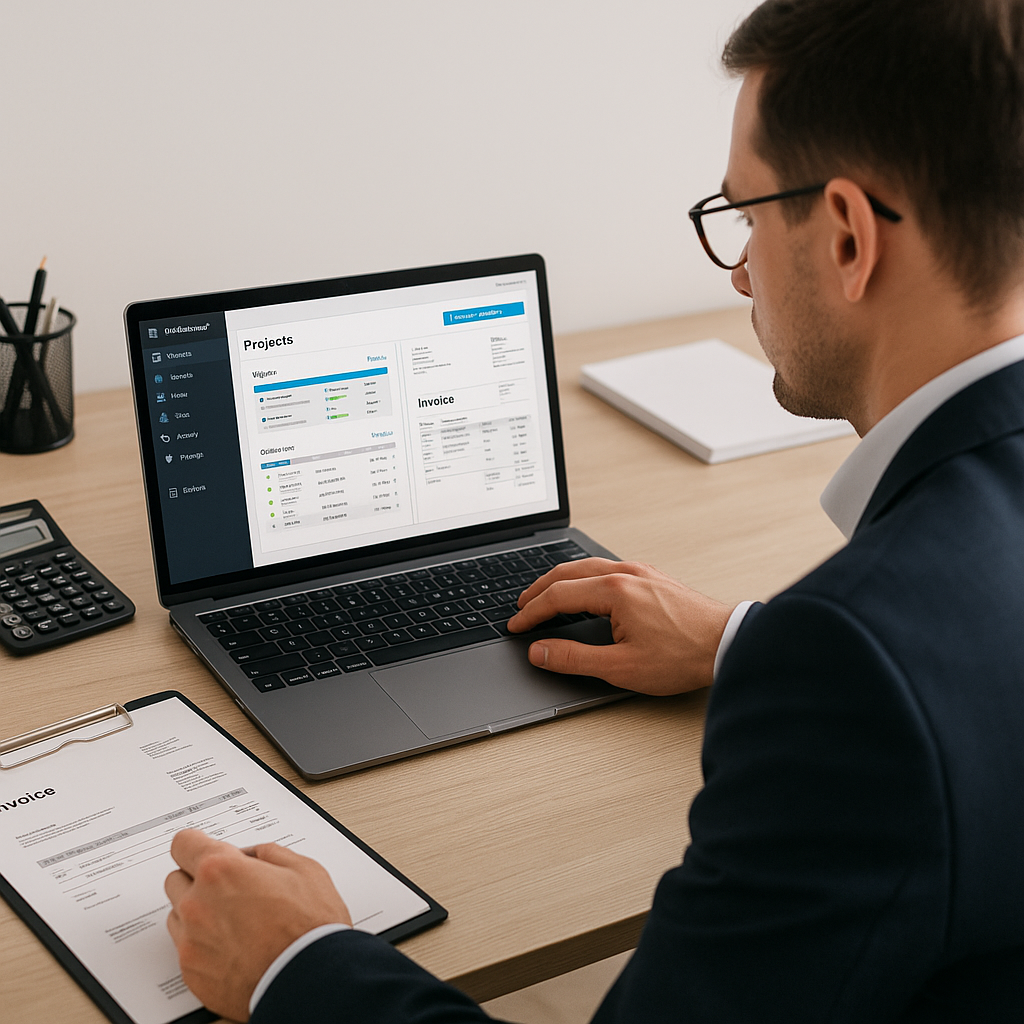
For many UK business owners, keeping projects on track and staying on top of invoices can feel like two separate jobs. When the two are managed in one place, it is often easier to keep records organised, protect cashflow and reduce avoidable admin.
If you are comparing tools this summer, understanding what is included in project management software with invoicing can help you choose a system that supports day-to-day operations without adding complexity. This is especially useful in June, when holiday cover, seasonal workloads and changing supplier costs can put extra pressure on your processes.
Core project management features you can expect
Most project management platforms with invoicing start with tools designed to help you plan, assign and monitor work.
Task and job tracking
A standard feature is the ability to break work into tasks, set deadlines and assign responsibilities. This gives business owners and managers a clearer view of what is happening across each job.
Typical functions include:
- Task lists and project boards
- Deadlines and milestone tracking
- Staff assignments and permissions
- Notes, files and job-related communication
- Progress updates in real time
These features are useful for service-based firms, trades, agencies and growing businesses that need a reliable record of what has been completed before an invoice is raised.
Time and cost recording
Many systems also include time tracking or job costing tools. This can help businesses record labour, materials and other billable activity against a project.
When this information sits alongside invoicing, it becomes easier to:
- prepare accurate bills
- review whether work is staying within budget
- monitor profitability by project
- support better budgeting and cashflow planning
For businesses handling multiple jobs at once, this joined-up view can improve financial organisation and reduce the risk of missed charges.
What invoicing features are usually included?
The invoicing side of the software is where project activity turns into billable documents and payment tracking.
Invoice creation and customisation
Most platforms allow you to create invoices using project data already stored in the system. Rather than retyping details, you can often pull through client information, completed tasks, logged hours or agreed charges.
Common invoicing features include:
- Branded invoice templates
- Automatic invoice numbering
- VAT settings
- Line items for labour, materials or fixed fees
- Recurring invoices for ongoing work
- Credit notes and payment records
This can save time while also helping maintain consistency across your billing process.
Payment tracking and reminders
Good project management software with invoicing often includes tools for monitoring what has and has not been paid.
Look for features such as:
- invoice status updates
- due date tracking
- automatic payment reminders
- partial payment recording
- reports on overdue balances
These functions can help businesses avoid late fees on their own outgoing commitments by improving incoming cashflow visibility. They also support better monthly planning, which is particularly important when summer staffing changes or supplier bills rise unexpectedly.
Features that support wider bill and cashflow control
Not every platform goes beyond client invoicing, but some businesses benefit from tools that support broader financial oversight.
For example, software may include:
- Expense tracking linked to projects
- Budget monitoring against expected costs
- Reporting dashboards for income and outgoings
- Secure online payment options
- Integrations with banks or accounting software
These features matter because invoicing is only one part of the picture. Business owners also need visibility over supplier bills, regular outgoings and payment timings.
That is where a specialist tool can add value. While project software may help you issue invoices, Assured Bills focuses on checking supplier invoices so businesses can identify pricing issues, stay organised and avoid paying more than expected. If you want to understand the wider support available, you can explore our bill management services.
What is not always included?
It is worth remembering that not all platforms offer the same depth.
Some tools are strong on project planning but only offer basic invoicing. Others can raise invoices but do little to help you review supplier charges, manage household-style recurring bills for premises, or track sudden cost increases from vendors.
Before choosing software, check whether it includes:
- automated payments or payment scheduling
- bill payment reminders
- supplier invoice review
- multi-user approval workflows
- integrations with your bank feed or finance systems
- reporting tailored to cashflow planning
If these are missing, you may still need a separate tool to stay fully in control of your business finances.
How to choose the right setup for your business
The best setup depends on how your business operates. A small consultancy may only need basic task tracking and simple invoices. A growing business with regular supplier purchases, subcontractors or fluctuating material costs may need stronger oversight.
A practical way to assess your options is to ask:
Do we need better billing, better project visibility, or both?
If your main issue is managing tasks and charging clients accurately, an integrated platform may be enough.
If your challenge is checking incoming supplier invoices, spotting unexpected increases and keeping on top of wider outgoing bills, you may need additional support beyond standard invoicing software.
Will it help during busy or disrupted periods?
In June and through the summer, holiday cover can make routine admin easier to miss. Systems with reminders, secure online records and automation can make a real difference when key team members are away.
Final thoughts
Project management software with invoicing usually includes task tracking, time recording, invoice creation, payment reminders and reporting. For many businesses, that offers a useful starting point for improving efficiency and keeping client billing organised.
However, it is important to remember that issuing invoices is not the same as checking what your own business is being charged. For stronger oversight of supplier bills, pricing changes and ongoing financial organisation, specialist support can make a meaningful difference.
If you would like help staying on top of business bills and supplier invoice checks, take a look at our contact page or explore Assured Bills’ services to see how we can support your business.