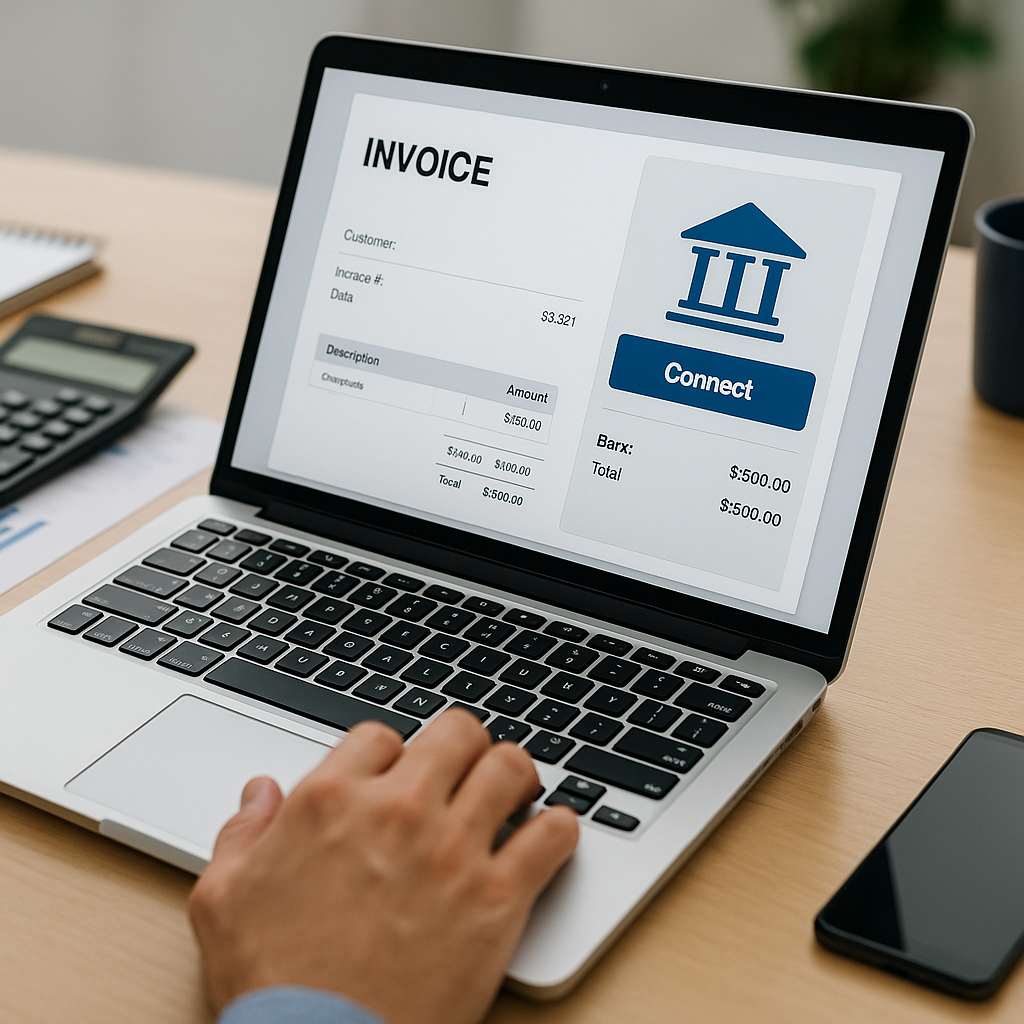
For many UK trade businesses, the short answer is yes. Modern invoicing software can often connect with your business bank account, helping you see payments clearly, reduce admin and keep tighter control of cashflow. For plumbing and heating firms in particular, that matters even more during a busy June period, when outdoor works, summer upgrades and holiday cover can all put pressure on time and margins.
The real question is not just whether invoicing software can integrate with your bank account, but whether that connection gives you better visibility, fewer errors and stronger cost control across the business.
What bank integration usually means
When an invoicing system links to your bank account, it typically pulls in transaction data so you can match incoming and outgoing payments against your records. That helps you avoid manually checking each line of your statement and gives you a clearer view of who has paid, what is still outstanding and where money is going.
For trade businesses, this can be useful in several ways:
- seeing customer payments land more quickly
- matching invoices against bank transactions
- spotting duplicate charges or unexpected supplier costs
- improving day-to-day cashflow visibility
- reducing time spent on manual admin
Some platforms connect directly through secure banking feeds. Others use approved third-party providers to import transactions safely. Either way, the aim is the same, to give you faster, more accurate financial oversight.
Why this matters for plumbing and heating businesses
If you run a plumbing or heating business in the UK, you are likely juggling supplier invoices, customer billing, material orders and labour costs at the same time. During summer, many firms are balancing planned maintenance, property upgrade work and staff annual leave. That can create gaps in oversight, especially when purchasing is spread across different merchants and team members.
Bank-linked invoicing software can help with the customer payment side. However, it does not always solve the wider problem of overpaying for heating and plumbing materials.
That is where businesses often need more than invoicing alone. They need better control over what they are being charged by suppliers, whether those prices are consistent and where margins are quietly being lost.
The benefits of connecting invoicing software to your bank
Better visibility over cashflow
A live or near live bank feed helps you understand your cash position more quickly. You can see which invoices have been paid and monitor money coming in against outgoing costs.
This is especially useful when summer workloads shift. A strong month on jobs does not always mean strong cashflow if supplier spending is rising faster than expected.
Faster reconciliation
Manual reconciliation takes time and increases the risk of mistakes. With a bank connection, many systems can suggest matches between transactions and invoices, helping you close the loop faster.
This can make month-end less painful and give business owners a more dependable picture of performance.
Fewer missed issues
When transactions and invoices are visible in one place, it becomes easier to notice unusual patterns. That could include a customer underpayment, a duplicate supplier charge or spending that does not match expected buying levels.
What bank integration does not fix on its own
This is where many businesses get caught out. Bank integration improves visibility, but visibility alone does not guarantee savings.
A transaction on your bank feed may show that you paid a merchant. It does not automatically tell you whether the price was competitive, whether the invoice contained pricing inconsistencies or whether you could have sourced the same items for less elsewhere.
For plumbing and heating contractors, that gap matters. Material costs can chip away at margin job by job, especially when teams are buying across multiple suppliers without a clear price comparison process.
A smarter approach to cost control
To improve profit, it helps to combine financial visibility with procurement visibility. That means not only seeing what has been paid, but understanding whether you should have paid that amount in the first place.
A stronger process usually includes:
- connecting your financial systems so payments are easier to track
- reviewing supplier invoices for pricing accuracy
- comparing costs across heating and plumbing materials
- improving supplier and order management
- reducing rushed purchasing that leads to overpayment
This is where Assured Bills adds real value. Rather than acting only as an invoicing tool, the platform helps trade professionals avoid overpaying for supplies and improve price transparency across their purchases.
What to check before choosing a system
If you are considering invoicing software with bank account integration, ask these practical questions:
Is the bank feed secure and compatible?
Check whether the software supports your UK business bank and uses secure, regulated connections.
Will it actually save admin time?
Look beyond the sales pitch. The right system should reduce manual effort, not simply move it to another screen.
Can it support wider cost control?
If your biggest margin leaks come from material buying rather than customer invoicing, choose tools that help you manage supplier pricing and purchasing decisions too.
Does it fit how your team buys materials?
Trade businesses need systems that reflect real buying habits, including multiple orders, urgent purchases and different supplier accounts.
Bank integration is useful, but margin control is the bigger win
So, can invoicing software integrate with your bank account? Yes, in many cases it can, and for UK businesses that can be a worthwhile step towards better financial control.
But if you want to protect profit properly, do not stop there. The bigger opportunity is combining invoice visibility with smarter procurement, better supplier oversight and clear pricing on the materials your team buys every week.
If you want a better handle on spending, pricing and supplier control, explore Assured Bills, or get started with a new account. If you already use the platform, you can access your Assured Bills login and take a closer look at where costs may be slipping through the cracks.