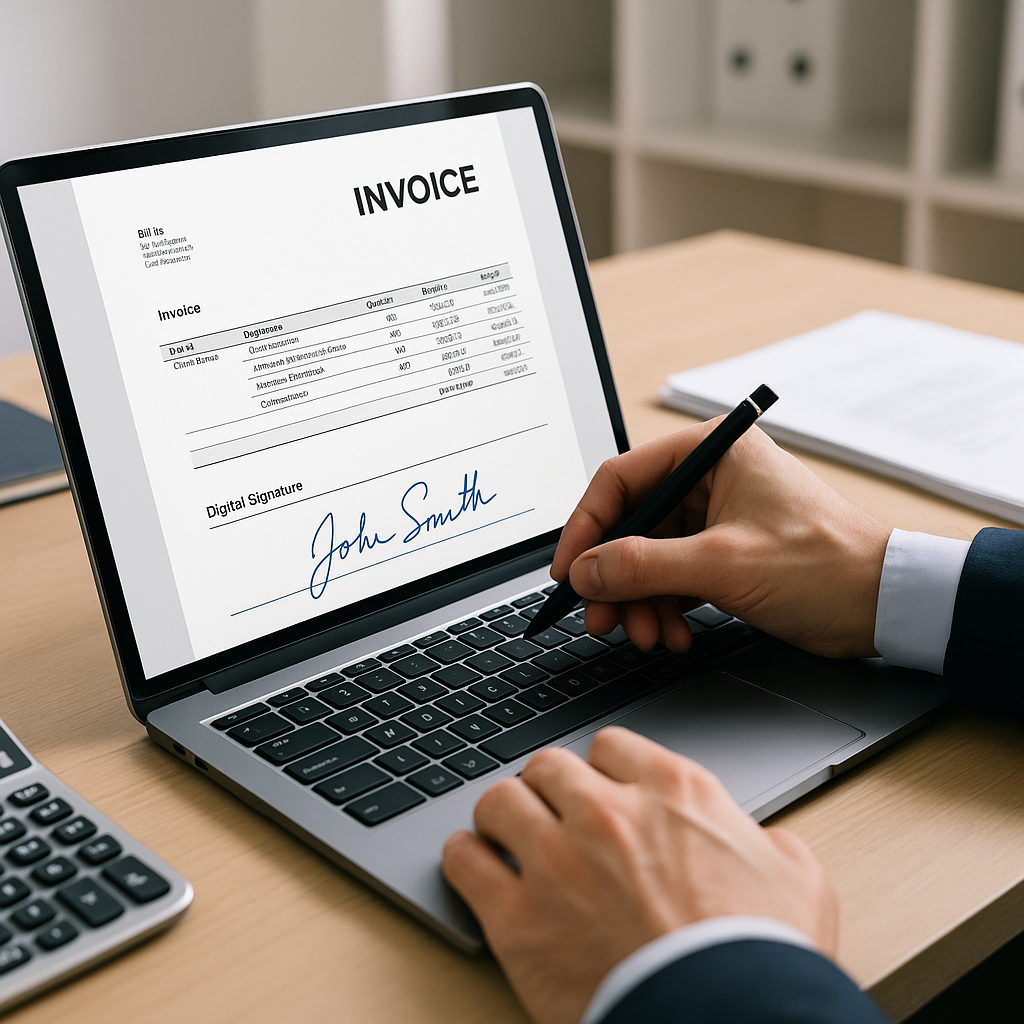
For many UK trade businesses, invoicing is now fully digital. That raises a practical question, do invoices need a digital signature to be valid? If you run a plumbing or heating business, or manage purchasing and supplier paperwork, the short answer is usually no. In most cases, a digital signature is not a legal requirement for a standard invoice in the UK.
What matters more is whether the invoice is accurate, complete and easy to verify. That is especially important in July, when holiday cover, rushed approvals and higher admin pressure can increase the risk of mistakes slipping through.
Do UK invoices legally need a digital signature?
In general, a standard business invoice in the UK does not need a digital signature to be legally valid. An invoice is mainly a commercial and tax document. Its purpose is to record what has been supplied, by whom, to whom, at what price, and on what terms.
For most trade businesses, the key requirement is that the invoice includes the right information and reflects a genuine transaction. If the invoice is for VAT-registered work, it must also meet HMRC rules for VAT invoices.
A digital signature may still be useful in some business processes, but that is different from being mandatory. Some firms choose to add signatures for internal approvals, contract acceptance or audit trails. That can help with control, but it is not the same as saying every invoice must be signed.
What matters more than a signature on an invoice?
If you want invoices to stand up to scrutiny, focus on the details that prove the charge is correct.
Key information an invoice should include
A professional invoice should normally show:
- the supplier’s business name and address
- the customer’s business name and address
- a unique invoice number
- the invoice date
- a clear description of the goods or services supplied
- quantities, unit prices and totals
- VAT details where applicable
- payment terms
- purchase order reference, if your process uses one
For plumbing and heating firms buying materials across multiple merchants, this level of detail is essential. It improves price transparency, makes supplier management easier and helps stop overpayment before money leaves the business.
Why verification matters in trade purchasing
A signature does not confirm that the price on an invoice is competitive or correct. It only shows that someone has signed or approved something. That is why many trade businesses are shifting their attention from simple sign-off to proper checking.
When material costs move quickly, especially during busy summer periods with outdoor works and staffing gaps, a weak invoice process can hurt margins. Common issues include:
- price differences from quoted rates
- duplicate charges
- incorrect quantities
- products billed at a higher specification than ordered
- supplier references that do not match your records
Where digital signatures can still be useful
Although digital signature requirements for invoices are limited in the UK, digital signatures can still play a useful role in wider finance and procurement workflows.
Internal approval and accountability
Some businesses use digital signatures to confirm that a manager has approved a purchase or accepted an invoice for payment. This can help when several people are ordering stock or covering for colleagues during annual leave.
Contract-linked billing
If an invoice relates to work governed by a signed contract, the signature usually matters more on the contract than on the invoice itself. The invoice should match the agreed scope, price and terms already authorised elsewhere.
Audit trail and dispute support
Digital approvals can also support record keeping. If there is a later query about who approved a payment, a secure digital trail may help resolve it more quickly.
Best practice for invoice control in 2026
For UK trade firms, the smartest approach is not to rely on signatures alone. Build a process that checks invoices against what was actually ordered and delivered.
A stronger invoice control process should include:
- matching invoices to quotes, orders or agreed supplier prices
- checking line items rather than only the final total
- flagging unusual price increases quickly
- keeping records centralised for the team
- using digital tools to reduce manual checking time
This is where modern trade purchasing platforms add real value. Instead of spending hours comparing paperwork by hand, firms can use better systems to improve cost control and protect margin.
For businesses that buy heating and plumbing materials regularly, this matters far beyond compliance. Better invoice checking supports smarter procurement, clearer supplier oversight and faster decisions.
Why this matters for plumbing and heating businesses
In a sector where margins can be tight, small invoice errors add up fast. A few pounds extra on valves, fittings, cylinders or controls across repeated orders can become a serious drain on profit over a busy quarter.
That is why Assured Bills focuses on helping trade professionals avoid overpaying for supplies. If your team wants more control over material spend, fewer admin headaches and clearer visibility on supplier pricing, it pays to tighten the whole checking process, not just add signatures.
You can learn more about the platform on the Assured Bills homepage, or get started with creating an account. Existing users can also access the system through the Assured Bills login page.
Final word
Digital signatures are not usually a legal requirement for standard UK invoices. Accuracy, completeness and verifiable records matter far more. For plumbing and heating businesses, the real opportunity is using better invoice controls to reduce overpayment, save time and strengthen margins.
If you want a simpler way to check supplier invoices and improve price transparency, Assured Bills can help you take control.