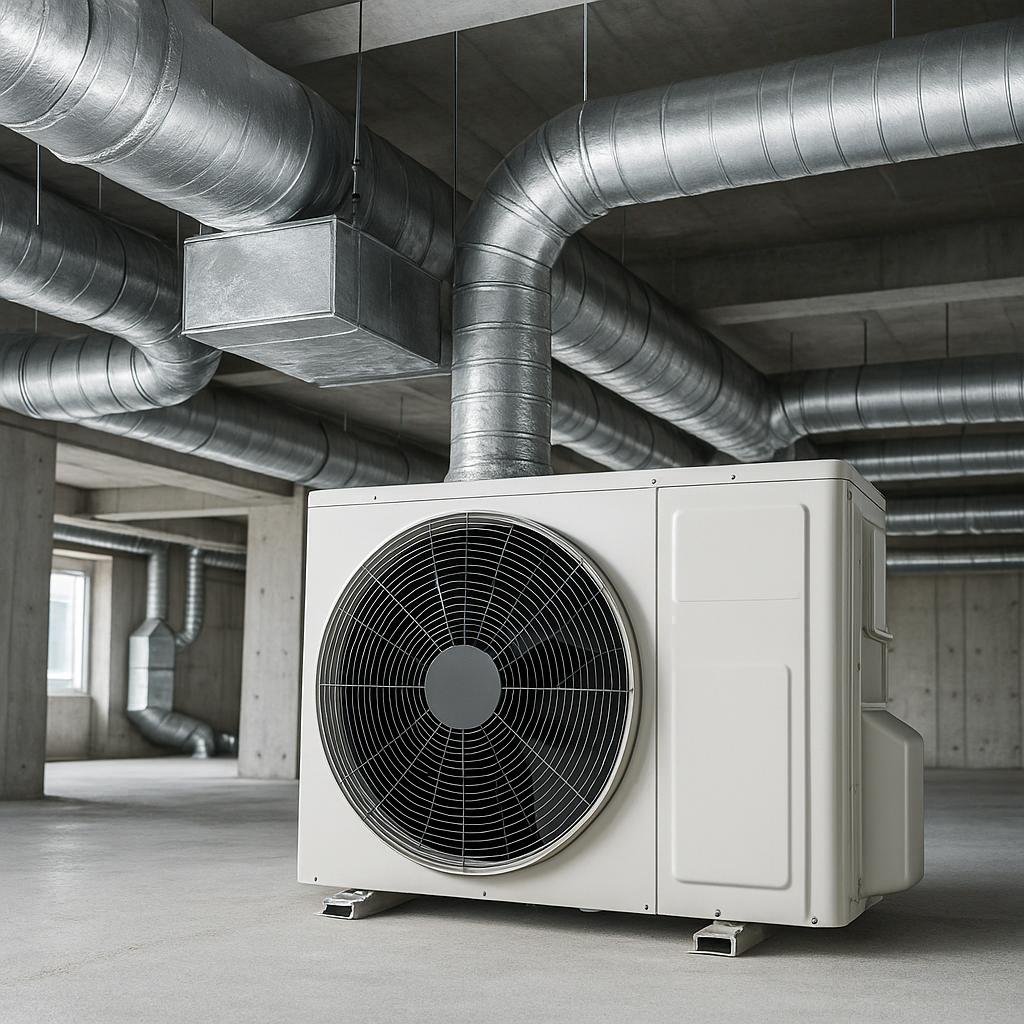
If you are planning a new air conditioning installation, it is easy to focus on the indoor unit, outdoor condenser and running costs. However, one important question often gets overlooked: can your current ductwork handle a new AC system?
For homeowners and small businesses in Chelmsford, this matters more in June, when warmer weather quickly exposes weak airflow, uneven cooling and wasted energy. Even a modern, efficient system can struggle if the ductwork supporting it is not suitable.
At Assured Cooling Essex, we often advise customers that cooling performance is about more than the unit itself. The way air moves around your property plays a big part in comfort, efficiency and long-term reliability.
Why ductwork matters with a new AC system
Ductwork is responsible for carrying cooled air from your system to the rooms that need it. If those ducts are too small, poorly sealed, damaged or badly laid out, the system may have to work harder than it should.
That can lead to problems such as:
- rooms that never seem to cool properly
- hot and cold spots around the property
- weak airflow from vents
- higher electricity use
- more wear on the system over time
- increased noise during operation
In simple terms, your ductwork needs to match the demands of the new equipment. This is especially important when upgrading to a more efficient model, because modern systems are designed to work within specific airflow requirements.
Signs your existing ductwork may not be suitable
Not every property in Essex has ducted air conditioning, and many homes are better suited to split or multi-split systems. However, where ductwork is already in place, it is worth checking whether it is fit for purpose before moving ahead.
Common warning signs
You may need your ductwork reviewed if you have noticed any of the following:
- Some rooms are always warmer than others.
- Airflow feels weak even when the system is running properly.
- Your current system seems to run for long periods without reaching the set temperature.
- Ducts are older, visibly worn or poorly insulated.
- There is a build-up of dust around vents.
- You hear rattling, whistling or other unusual noises.
These issues do not always mean full replacement is needed, but they do suggest the ductwork should be assessed as part of the installation plan.
What an installer will check
A professional survey should look beyond the air conditioning unit itself. An experienced installer will assess whether the ductwork can deliver the right volume of air, maintain efficiency and support reliable operation.
Key areas reviewed
This usually includes:
- Duct size: undersized ducts can restrict airflow
- Condition: older ducts may have leaks, loose joints or internal damage
- Insulation: poor insulation can reduce cooling performance, especially in loft spaces
- Layout: long or awkward runs can make it harder to distribute air evenly
- Cleanliness: debris and dust build-up can affect both airflow and air quality
For homes and light commercial properties in Chelmsford, practical system design is essential. There is little benefit in fitting a high-performance unit if the air distribution network cannot support it properly.
When ductwork upgrades make sense
In some cases, the existing ductwork can stay in place with only minor improvements. In others, alterations may be needed to get the best from your new system.
Possible upgrades include:
- sealing leaks to reduce energy waste
- improving insulation around duct runs
- adjusting sections of ducting to improve airflow
- replacing damaged or poorly sized parts
- redesigning problem areas for more balanced cooling
This is also the stage where some property owners decide that a ductless solution may be more suitable. Split and multi-split systems can be an excellent option where existing ductwork is limited, outdated or impractical to upgrade. If you are comparing options, our air conditioning services can help you understand what is best for your property.
Efficiency, comfort and running costs
A well-matched system is not just about keeping cool. It also affects how cheap to run your air conditioning will be over the summer.
If the ductwork is leaking or restricting airflow, your system may use more electricity to achieve the same result. That reduces the benefit of investing in newer, more efficient equipment. For anyone searching for air conditioning efficiency Chelmsford, this is a key part of the conversation.
The same applies if you are looking into VAT-free air conditioning Essex options for eligible residential installations. Tax savings can be valuable, but it still makes sense to ensure the full system, including airflow distribution, is properly considered so you get lasting value from the installation.
Is ductwork always needed for home air conditioning?
Not necessarily. Many residential properties in Essex are far better suited to wall-mounted split or multi-split systems, which do not rely on traditional ductwork at all. These systems are popular because they are tidy, efficient and offer flexible room-by-room control.
For homeowners who want reliable cooling in bedrooms, loft conversions, home offices or garden rooms, a ductless setup is often the simplest and most effective route. It can also help improve comfort during increasingly warm June and July spells without the disruption of trying to adapt unsuitable ducting.
The best next step before you commit
The safest approach is to have your property assessed before choosing a system. A professional installer can confirm whether your existing ductwork is suitable, whether it needs adjustment, or whether another type of system would serve you better.
At Assured Cooling Essex, we provide straightforward advice based on your property, your usage and your comfort goals. As an F-Gas registered company and authorised installers for Midea and Bosch, we focus on practical, efficient solutions for homes and small businesses across Chelmsford and the wider Essex area.
If you are considering a new system this summer and want honest guidance, get in touch through our contact page or ask about a survey. We will help you decide whether your current ductwork can support a new AC system, and recommend the most sensible next step for your property.