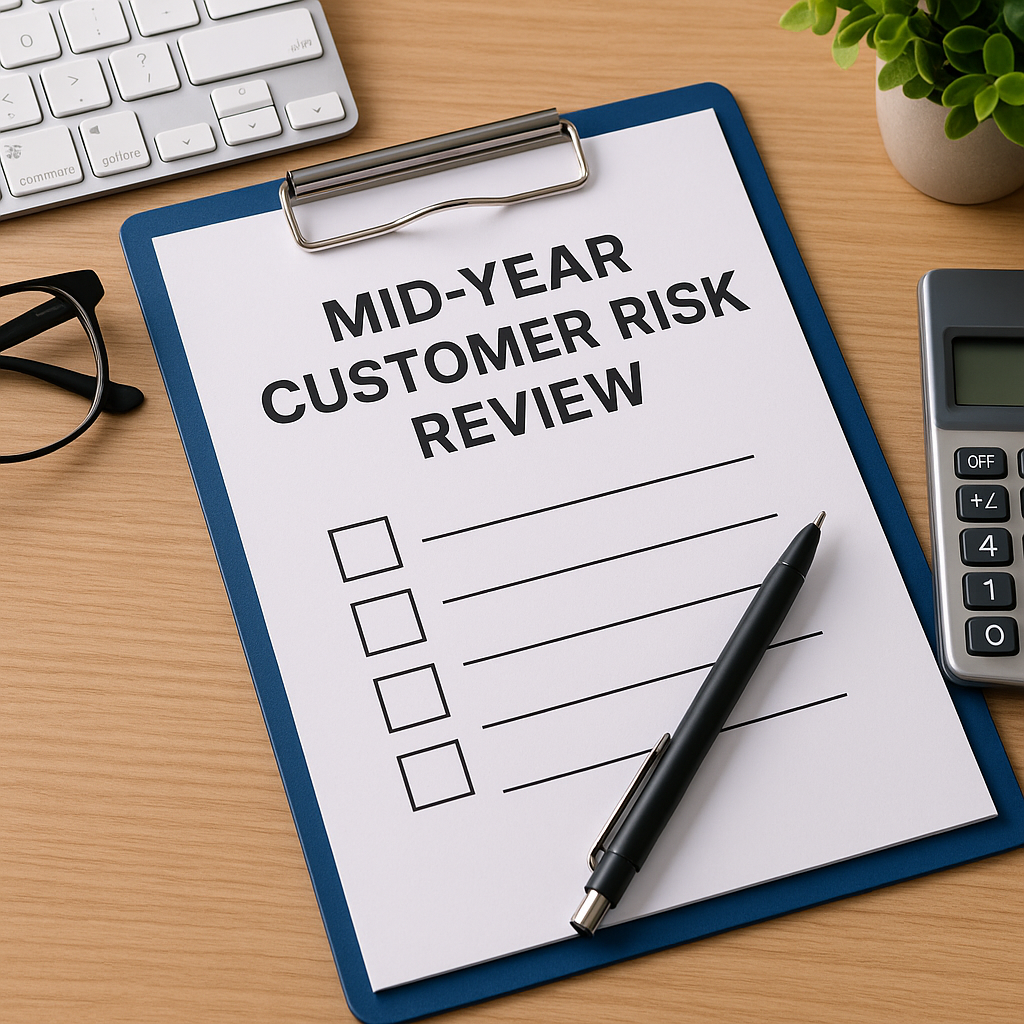
June is a sensible point in the year for UK businesses to reassess customer risk. Trading patterns often change as summer approaches, staff take annual leave, and onboarding decisions may be made more quickly to keep work moving. That combination can increase the chance of missed warning signs, weak documentation, and avoidable bad debt.
A structured mid-year review helps businesses strengthen customer due diligence without disrupting operations. For firms in financial services, property, e-commerce, subscriptions, and other regulated or credit-sensitive sectors, it is also a useful opportunity to confirm that identity checks, affordability assessments, and fraud controls are still fit for purpose.
For businesses using platforms such as Check a Customer, June is an ideal time to tighten decision-making before summer trading pressures build.
Why June is the right time to review customer due diligence
A mid-year review is not simply an administrative exercise. It helps identify where risk has drifted since January and where current controls may no longer match the level of exposure your business is taking on.
In June, several practical issues tend to affect UK businesses:
- seasonal demand can lead to faster onboarding and reduced scrutiny
- holiday cover may mean less experienced staff approve new accounts
- higher household and business costs can affect affordability and payment behaviour
- outdoor projects, property moves, and summer travel can create more urgent applications and transactions
- fraudsters may exploit busy periods when teams are stretched
If your organisation offers payment terms, recurring services, tenancy agreements, or account opening, a June due diligence checklist can help reduce inconsistency and support better decisions.
What a strong mid-year customer risk review should include
A useful review should focus on both process and evidence. The goal is to confirm that your business is gathering the right information, assessing it fairly, and storing it securely.
1. Recheck identity verification standards
Start with your customer identity verification process. Ask whether your current checks are still proportionate to the services you provide and the risks you face. For example:
- are you verifying identity before services are supplied or credit is extended
- are manual checks being used where automated checks would be more reliable
- are exceptions recorded clearly and approved by the right person
- are high-risk applications subject to enhanced review
This is particularly important where summer workloads increase and staff may be tempted to bypass standard controls.
2. Review creditworthiness and affordability checks
If you provide goods or services before full payment, review how you assess ability to pay. A proper review should consider whether current thresholds still reflect market conditions and customer behaviour.
Look at:
- whether credit checks are completed consistently
- whether affordability assessments remain suitable for your sector
- whether credit limits are reviewed for returning customers
- whether missed or late payments are being flagged early enough
This approach is more reliable than relying on instinct alone when trying to spot a customer that is not likely to pay.
3. Test fraud and risk scoring rules
Fraud prevention controls should not remain static. Review whether your risk scoring rules still capture the right indicators, especially where transaction volumes or customer types have changed.
Check for patterns such as:
- mismatched identity and contact details
- unusual urgency around account opening
- multiple applications linked to similar data points
- requests to change payment arrangements early in the relationship
These issues do not prove wrongdoing on their own, but they do justify closer review.
A practical June checklist for UK businesses
Use this June due diligence checklist to assess whether your current customer screening process is robust enough for summer trading.
- Confirm that onboarding procedures are documented and up to date.
- Review whether identity verification is completed before approval.
- Check that credit and affordability assessments are applied consistently.
- Ensure KYC and AML triggers are clearly defined for higher-risk cases.
- Test whether fraud alerts are being reviewed promptly.
- Audit a sample of recent customer approvals for quality and completeness.
- Verify that staff covering annual leave understand approval limits.
- Review retention, access, and handling of customer data for GDPR compliance.
- Reassess customers with overdue balances or changed payment patterns.
- Update escalation routes for suspicious or incomplete applications.
For smaller businesses, even a short monthly review against this list can improve consistency and reduce exposure to non-payment.
Common gaps businesses find during a mid-year review
Many organisations assume their checks are working because issues have not yet surfaced. In practice, a June review often highlights gaps such as inconsistent documentation, over-reliance on manual judgement, or unclear escalation steps.
Inconsistent checks between teams
Where sales, lettings, operations, and finance teams all interact with customers, standards can vary. One team may complete full screening, while another may accept incomplete information to avoid delays.
Weak controls during holiday cover
Temporary approvers may not know when to request further evidence, apply enhanced due diligence, or stop an application altogether. That can create unnecessary exposure at exactly the wrong time of year.
Poor visibility of changing customer risk
A customer who passed checks six months ago may now present a different level of risk. Periodic reviews help businesses identify deteriorating payment behaviour before losses grow.
Make your process more reliable, not more intrusive
Good due diligence should be proportionate, relevant, and compliant. It is not about collecting unnecessary personal information or making assumptions based on irrelevant factors. It is about using trusted data sources, applying clear criteria, and documenting decisions responsibly.
For UK businesses, that means balancing fraud prevention and credit risk management with secure data handling and GDPR compliance. It also means making sure customer screening supports fair, consistent onboarding rather than creating unnecessary friction.
If you need a clearer way to review identity, affordability, and risk before taking on new customers, visit Check a Customer to see how the platform can support more confident decision-making. You can also start from the homepage to explore a practical approach to safer customer verification and background checks.