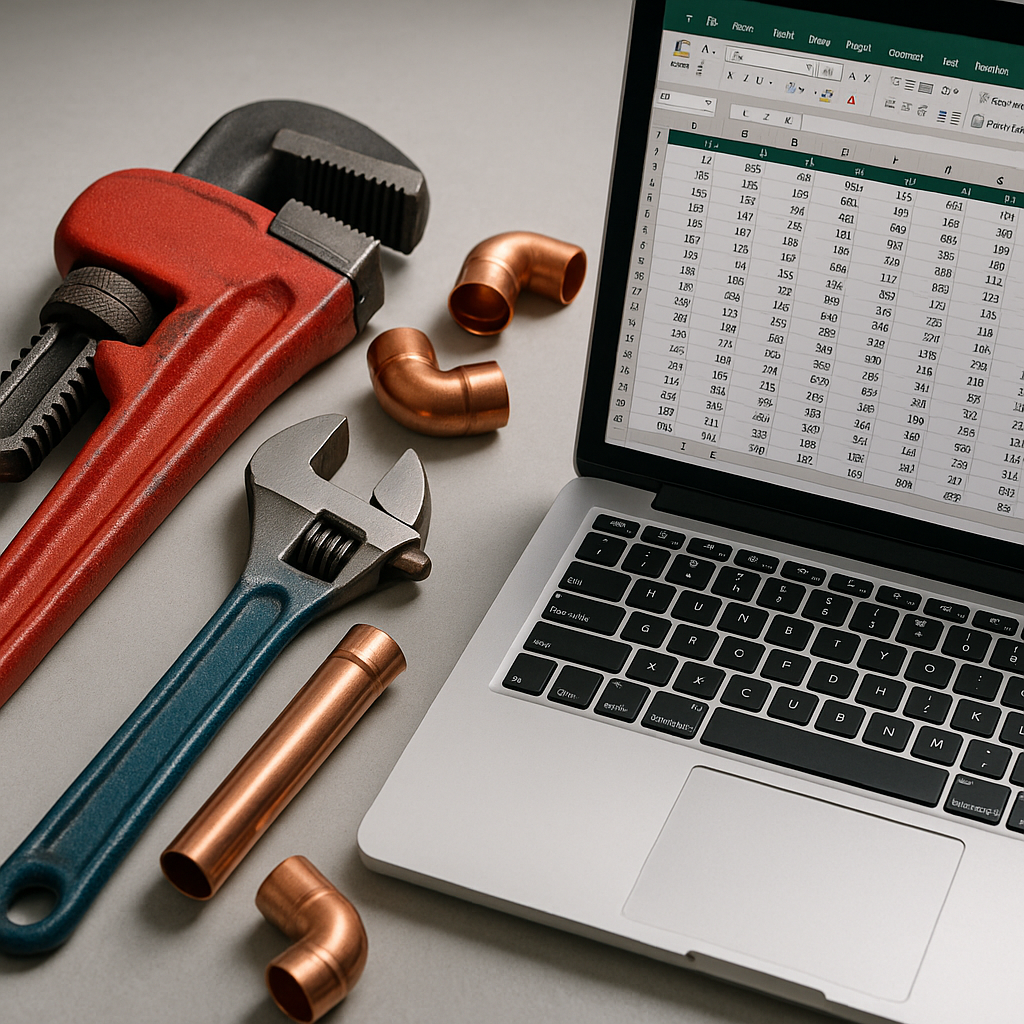
For many UK trade businesses, spreadsheets still do a lot of heavy lifting. Even if you already use ServiceM8 for jobs, quotes and day-to-day admin, a well-structured spreadsheet can still be one of the most useful tools in the business.
That is especially true in September, when many plumbing, heating and maintenance firms are preparing for a busier autumn and winter period. Supplier prices can change, stock lists grow, and office teams need a reliable way to keep material information clear before the heating season gets fully underway.
The problem is not spreadsheets themselves. The problem is usually messy spreadsheets, multiple versions, and no clear process for keeping them in sync with the systems your team uses every day.
Why spreadsheets still work so well
Spreadsheets remain popular because they are flexible, familiar and easy to update. Most business owners and office managers do not need special training to use Google Sheets or Excel, and that makes them practical for busy trade firms.
For a small or growing plumbing business, a spreadsheet can be useful for:
- storing supplier product lists
- tracking cost changes over time
- comparing old and new material prices
- keeping a simple master record of product codes
- checking markup before updating selling prices
- reviewing seasonal items before busy periods
In real life, many ServiceM8 users do not receive supplier pricing in a format that is ready to use straight away. It often arrives as a spreadsheet or CSV file. That means spreadsheets are still the starting point for managing prices, even if ServiceM8 is where your team raises quotes and invoices.
Where spreadsheets help more than your job management system
ServiceM8 is great for operational work, but spreadsheets are often better for reviewing and preparing data before it goes live.
Easier filtering and checking
If you want to sort products by supplier, compare current cost against last month's cost, or spot gaps in product codes, a spreadsheet gives you a quick way to do it. You can filter hundreds or thousands of lines in seconds.
That makes spreadsheets especially useful when you are reviewing autumn supplier updates and checking whether winter essentials such as valves, pumps, fittings or heating controls need a pricing review.
Better for planning before making changes
A spreadsheet gives you a safe working area. You can test price changes, add notes, and review updates internally before anything is pushed into ServiceM8. That helps reduce mistakes and gives your office team more confidence.
For many trade businesses, the spreadsheet becomes the working document, while ServiceM8 remains the live operational system.
The biggest mistake is using too many spreadsheets
Spreadsheets are useful, but only if there is one trusted version.
A common issue in growing trade businesses is that different people keep their own copy. One version sits on a laptop, another gets emailed around the office, and someone else updates a separate file after a supplier sends a revised list. That is when confusion starts.
You might see problems like these:
- engineers using different material prices
- duplicate products being added in different formats
- quotes based on old cost prices
- office staff wasting time checking which file is correct
- inconsistent markup across jobs
This is why the best setup is usually a single central spreadsheet, often in Google Sheets, used as the source of truth for product and pricing data.
How to make spreadsheets genuinely useful
If you want a spreadsheet to support your trade business properly, keep it simple and consistent.
Include the right columns
A practical product sheet usually includes:
- supplier name
- supplier product code
- internal item name
- cost price
- selling price
- markup or margin
- VAT status, if needed for your process
- last updated date
- notes or status
Keep naming consistent
Use the same naming rules every time. If one product is listed as 22mm Copper Elbow in one row and Copper Elbow 22 mm in another, it becomes harder to check matches and spot duplicates.
Review changes regularly
September is a good time to tighten this up. If your team is about to handle more heating work over autumn and winter, now is the time to review core materials, seasonal parts and fast-moving items before workloads increase.
Spreadsheets and ServiceM8 work best together
This is not really a case of spreadsheets versus software. For most trade businesses, the best setup uses both.
Your spreadsheet can hold the structured product data you maintain and review. ServiceM8 can then be the place where your team actually uses that information on live jobs.
That approach gives you:
- more control over price management
- fewer manual checks inside ServiceM8
- a clearer process for supplier updates
- better consistency between office staff and engineers
- less risk of outdated prices being used
MaterialM8 is built around this practical way of working. It helps ServiceM8 users connect a central spreadsheet with their inventory process, without making the setup overly technical. If you want to see the main platform, visit Materialm8. You can also learn more about Materialm8 for ServiceM8 users and explore tools for keeping pricing data organised.
When a spreadsheet stops being enough on its own
A spreadsheet is still useful, but it can become hard to manage on its own when:
- your product list grows into the hundreds or thousands
- multiple staff need access
- supplier prices change often
- you need cleaner control over updates in ServiceM8
- duplicate items start appearing
At that point, the spreadsheet should still stay part of the process, but it usually needs a better connection to the rest of your system.
Final thoughts
Spreadsheets are still useful for trade businesses because they are flexible, familiar and practical. They help you review supplier data, compare costs, and maintain a clear pricing record before changes affect live jobs.
For UK ServiceM8 users, the smartest approach is often not replacing spreadsheets, but using them properly. One clean spreadsheet, one clear process, and one reliable way to keep pricing aligned across the business can save time and reduce costly errors.
If you want a simpler way to connect your spreadsheet process with ServiceM8, MaterialM8 can help you keep your product and pricing data better organised. Visit Materialm8 to see how it works.