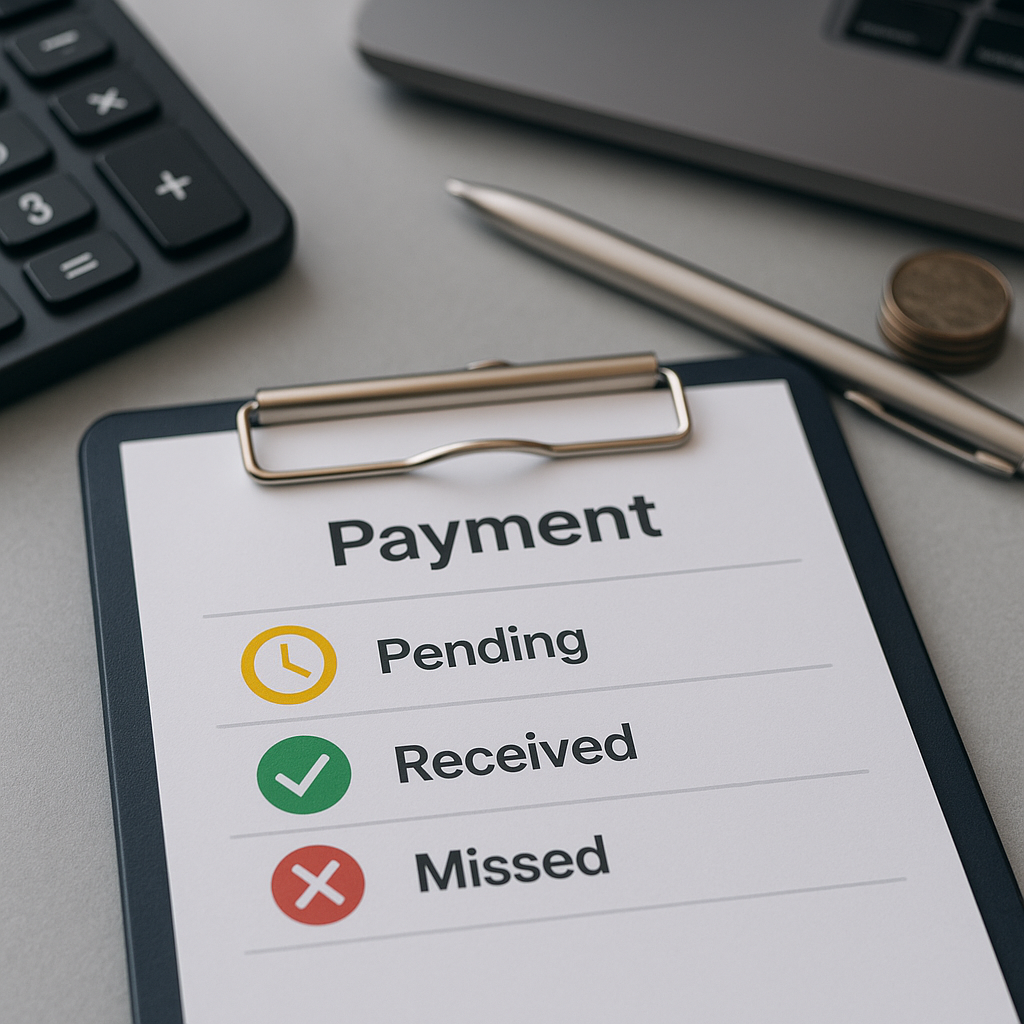
When you are co-parenting, money conversations can become stressful very quickly. Even when both parents want to do the right thing, confusion over whether a payment has been sent, received or overlooked can lead to unnecessary tension. That is why understanding payment statuses matters.
For separated parents managing shared parenting finances, clear records can make everyday admin feel calmer and more manageable. A simple system for marking a payment as pending, received or missed helps reduce misunderstandings, supports better child support payment tracking and keeps the focus where it belongs: on your child’s needs.
At Split the Sprout, the aim is to make transparent money management for separated parents easier, more practical and less emotionally draining.
Why payment statuses matter in co-parenting
A payment status is more than just a label. It gives both parents a shared understanding of where things stand at any given moment.
Without clear statuses, common problems can arise:
- One parent thinks a payment is on the way, while the other believes it has been forgotten
- A reimbursement for school shoes or a club fee gets lost in old messages
- Regular child-related payments become harder to track over time
- Disagreements grow because there is no shared digital record
Using clear payment statuses can help create a calmer routine. Instead of relying on memory or searching through bank statements and messages, both parents can refer to the same record. This is especially useful in May, when many families around CM3 8DN are planning half-term activities, summer clubs, new school uniform items or outdoor activities that bring extra seasonal costs.
What does pending mean?
A pending payment is one that has been agreed, scheduled or requested, but has not yet been confirmed as completed.
In plain English, it means: this payment is expected, but it has not arrived yet.
When a payment might be marked pending
Examples include:
- A regular child support payment due at the end of the month
- A contribution towards school trip costs
- Shared payment for new trainers, clothing or activity fees
- Reimbursement for a child-related purchase already made by one parent
Marking a payment as pending can be helpful because it shows that the expense is already recognised. That can stop the same item being disputed later or forgotten completely.
Why pending is useful
Pending payments help both parents:
- See what is due soon
- Budget for children’s needs more clearly
- Reduce last-minute surprises
- Keep communication factual rather than emotional
If you are looking for practical co-parenting tools and apps, having a clear pending status is one of the simplest ways to stay organised. A structured system such as our child payment tracking tools can make this far easier to manage consistently.
What does received mean?
A received payment is one that has arrived and been confirmed. This status matters because it closes the loop.
Rather than leaving things vague, marking a payment as received creates clarity for both parents. It confirms that the amount has been paid and logged, which is an important part of transparent money management for separated parents.
Good habits when marking a payment as received
To keep records clear, it helps to log:
- The amount paid
- The date received
- What the payment was for
- Any note that adds context, if needed
This does not need to be complicated. The goal is not to create more admin. It is simply to create a reliable record that both parents can understand later.
Received payments are particularly useful when reviewing spending patterns over time. For example, if spring and early summer bring extra costs such as school events, camps or replacing outgrown clothes, a clean record helps you see what has already been covered and what is still outstanding.
What does missed mean?
A missed payment is one that was expected by a certain date but has not been received.
This status can feel more sensitive than pending or received, but it is still important. Used carefully, it is not about blame. It is about accuracy.
A missed payment record helps separate facts from assumptions. Instead of an argument starting with “you never pay on time”, the discussion can stay grounded in a clear timeline.
When to mark a payment as missed
A payment may be missed when:
- The agreed due date has passed
- There has been no confirmation of payment
- The amount has not appeared in your account
- No alternative arrangement has been recorded
That factual approach supports better shared parenting finances and can help reduce conflict over money.
A simple way to use payment statuses well
Payment statuses work best when both parents use them consistently. You do not need a perfect system, but you do need a clear one.
Here are a few practical tips:
- Agree what each status means
- Use due dates consistently
- Update records promptly after payment
- Keep notes brief and factual
- Review outstanding items regularly
Keep the language neutral
This is one of the most important points. Terms like pending, received and missed should support clarity, not criticism. Neutral wording can make difficult co-parenting admin feel much less personal.
For many families, digital records for child-related spending are more reliable than scattered texts, emails and screenshots. If you want a calmer way to manage payments and expenses, you can explore our co-parenting expense management platform to see how it supports day-to-day organisation.
Why this matters for everyday family life
When payment statuses are clear, parents spend less time chasing information and more time planning for real needs. That might mean covering a school club, paying for travel, replacing outdoor clothing for the warmer weather or preparing for the extra costs that often build up before summer.
For co-parents in CM3 8DN and across online English-speaking markets, the real benefit is not just better records. It is more peace of mind. Clear child support payment tracking can help lower stress, support fairer conversations and create a more dependable routine for everyone involved.
Final thoughts
Understanding payment statuses is a small change that can make a meaningful difference. Pending shows what is expected, received confirms what has been paid, and missed highlights what still needs attention. Together, they create a clearer picture of shared child-related finances.
If you want a practical, reassuring way to manage payments, split children’s expenses and keep transparent records, Split the Sprout can help you stay organised with less stress and less conflict.