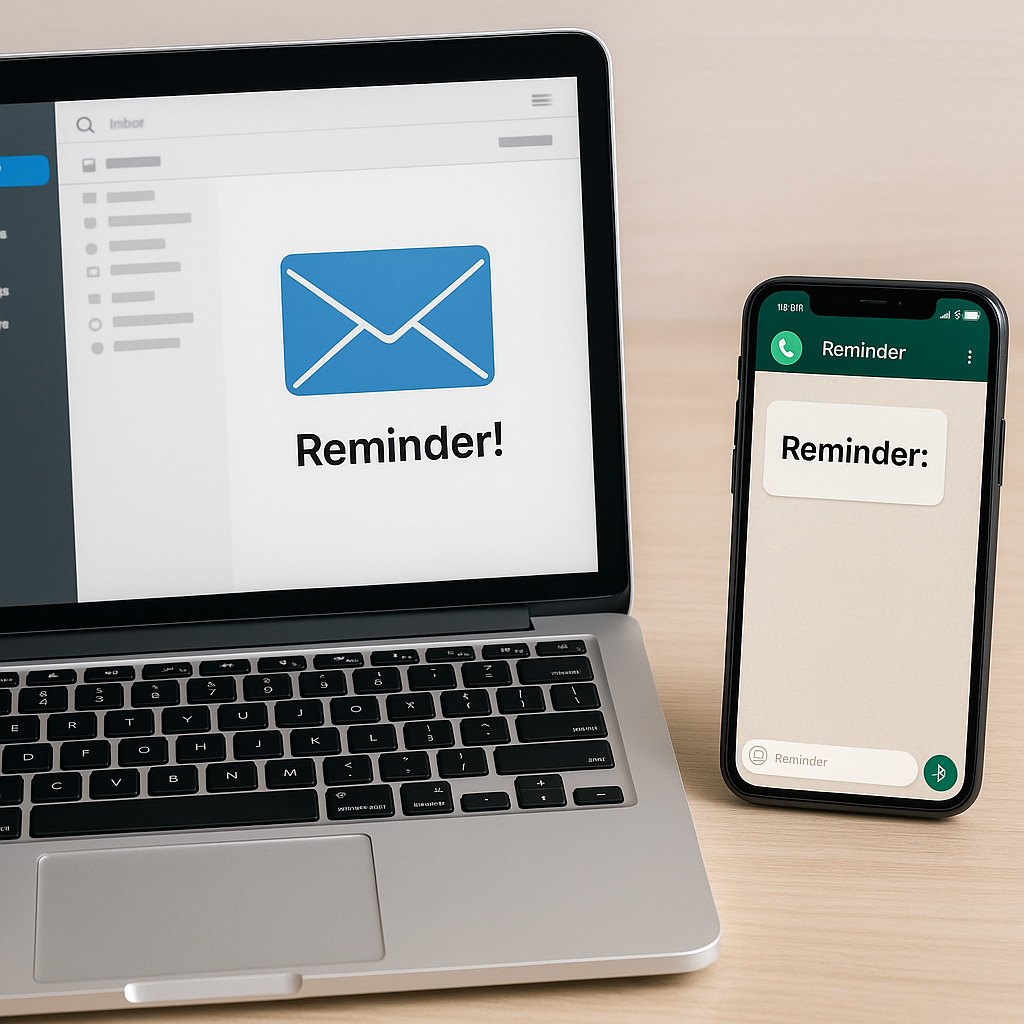
When you are managing shared parenting finances, even a simple reminder can feel loaded. A message about a nursery fee, school trip or children’s summer clothes can either keep things moving smoothly or create unnecessary tension. That is why choosing the right channel matters.
For separated and co-parenting families, child support payment tracking is not just about what is owed. It is also about how information is shared, how clearly records are kept, and how both parents stay focused on children’s needs rather than old disagreements.
As June brings summer clubs, holiday childcare and end-of-term costs, many parents in places like CM3 8DN and across the UK are looking for practical ways to stay organised. One common question is this: should you send reminders by email or WhatsApp?
Why the reminder method matters
A reminder is never just a reminder. It can affect:
- how quickly the other parent sees the message
- whether the tone feels calm and neutral
- how easy it is to refer back to later
- whether there is a clear digital record of child-related spending
- how much back-and-forth is needed to sort things out
When you are trying to reduce conflict over money, the best option is usually the one that is clear, consistent and easy to evidence if needed.
When email works best
Email is often the stronger choice when the amount, reason or timing needs to be set out properly.
Email is useful for detail and structure
If you are reminding someone about a larger cost or a shared expense with several parts, email gives you room to explain it clearly. For example, an email can include:
- the child-related expense
- the amount due
- the agreed split
- the payment date
- any supporting notes or receipts
This makes email especially helpful for splitting children’s expenses such as school uniform bundles, summer activity fees or holiday club payments.
Email creates a clearer record
One major benefit of email is that it is easier to search, store and review later. If there is ever confusion about what was requested and when, an email trail can be easier to follow than a long message thread.
For co-parents who want transparent money management, this matters. A calm, factual email can reduce misunderstandings because everything is written out in one place.
Email can feel less intrusive
WhatsApp messages often arrive instantly and can feel more emotionally charged, especially if the relationship is already strained. Email can create a little breathing space. That extra distance sometimes helps both parents respond more thoughtfully.
When WhatsApp works best
WhatsApp can be useful when the reminder is simple, time-sensitive and already expected.
WhatsApp is good for quick prompts
If you already have an agreed routine and just need a brief nudge, WhatsApp may be enough. For example:
- “Just a reminder the swimming payment is due tomorrow.”
- “I’ve uploaded the school trip cost for this week.”
Used carefully, short messages can keep things moving without turning the issue into a bigger conversation.
WhatsApp may get a faster response
Many people check WhatsApp more often than email. If the expense is urgent, such as a same-week childcare contribution during the summer holidays, a message may be seen sooner.
That said, speed is not always the most important thing. If a quick message leads to a rushed or unclear exchange, it may not actually solve the problem.
The risks of each option
Neither channel is perfect. The key is knowing what each one does well and where problems can start.
Common email drawbacks
- messages may be missed in a crowded inbox
- replies can be slower
- long emails can feel formal if the issue is small
Common WhatsApp drawbacks
- messages can become emotionally reactive very quickly
- details may get buried in a longer chat
- it can be harder to keep a neat record of shared parenting finances
- tone is easier to misread
If your goal is reducing conflict over money, avoid mixing reminders with unrelated parenting disagreements. A reminder should stay focused on the child’s expense, the amount and the next step.
A simple way to choose
If you are unsure which channel to use, this quick guide can help:
- Use email for detailed costs, multiple items, receipts, or anything you may need to refer back to.
- Use WhatsApp for short, routine reminders where both parents already know the context.
- Use one main system consistently so nothing gets lost.
- Keep the message neutral and centred on the child’s needs.
- Log the expense separately in a proper tracking tool rather than relying only on messages.
That final point is often the most important. Messaging apps are helpful for communication, but they are not designed to manage ongoing shared parenting finances on their own.
Why a dedicated co-parenting tool can work better
Relying on email or WhatsApp alone often means hunting through old messages, checking screenshots and trying to remember what was agreed. A dedicated tool gives you a more reliable system for child support payment tracking and budgeting for children’s needs.
With Split the Sprout, parents can keep records of child-related spending in one place, helping both sides see what has been added, what has been paid and what still needs attention. That sort of visibility can make summer spending, from clubs to travel costs, much easier to manage fairly.
If you want a clearer overview of features built around co-parenting and transparent records, you can explore our co-parenting finance tools. If you are ready to ask a question or find out how the platform could fit your situation, you can also contact Split the Sprout.
The best choice is the one that keeps things calm and clear
So, email or WhatsApp reminders: which should you use? For most co-parents, the answer is both, but for different jobs. Email is better for clarity, detail and record-keeping. WhatsApp is better for short, routine nudges when speed matters.
The most effective approach is not choosing one app over another. It is building a simple, consistent process that supports fairness, transparency and less conflict.
If you want a better way to manage reminders, records and shared child-related costs, Split the Sprout can help you stay organised with less stress.