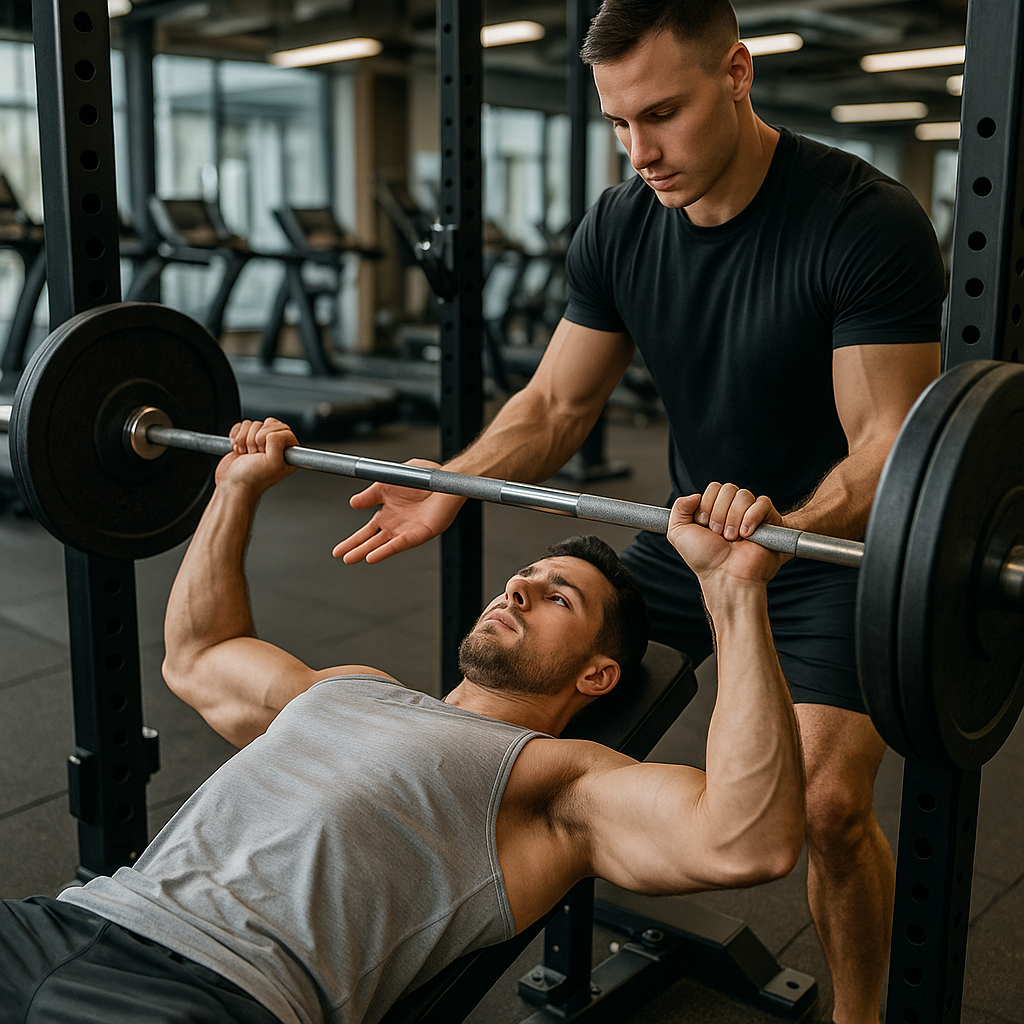
When the weights get heavy, form matters. So does having the right spotter.
In a serious gym, people respect hard training. They push sets, chase progress and test limits. That is part of the game. But there is a big difference between training hard and training recklessly. One of the most overlooked ways to prevent gym injuries is proper spotting, especially when autumn training blocks start getting heavier in places like Dewsbury.
As September rolls on and the weather in West Yorkshire starts cooling down, a lot of lifters tighten up, load up and get stuck into new strength phases. That is exactly when bad spotting habits can turn a hard set into a shoulder strain, a pec tear, or worse. In an old-school environment like The Muscle Pit, Venice Beach Dewsbury, serious lifting should always come with serious standards.
Why spotting is about safety, not ego
A proper spot is not there to steal your reps. It is there to protect you when a lift breaks down.
Too many lifters either avoid asking for a spot because of pride, or grab the nearest person without making sure they actually know what they are doing. Both mistakes can cost you. If your goal is strength training, hypertrophy, bodybuilding or powerlifting, then you need to treat spotting as part of proper lifting technique, not as an afterthought.
Good spotting helps you:
- stay safer when a rep stalls
- keep control during the hardest part of a lift
- avoid panic movements that wreck your form
- train harder with more confidence
- reduce the risk of failed reps turning into injury
That matters even more in a hardcore gym where members are chasing real progression, not messing about with gimmicks.
Which lifts need the most attention
Not every exercise needs a spotter. But some absolutely deserve one, especially when the weight is pushing your limit.
Bench press is the big one
The bench press is where poor spotting causes some of the worst avoidable accidents. A lazy spotter who grabs the bar too early ruins the set. A clueless spotter who reacts too late can leave you trapped under load.
A proper bench spot means the spotter helps with lift-off only if needed, stays close without touching the bar, watches the bar path, and steps in fast if the rep dies.
Heavy dumbbell presses can go wrong fast
Flat and incline dumbbell pressing can be rough on the shoulders when fatigue kicks in. Getting the bells into place and back down safely is half the battle. If you are pushing hard for chest and shoulder growth, a training partner who knows when to assist can stop an awkward bailout from turning into an injury.
Squats need the right setup
A barbell squat is not usually spotted the same way as a bench. If you are lifting inside a rack, safety arms should be set properly. If you are using human spotters, they need to know their role before the set starts. Random last-second grabbing from behind helps nobody.
What proper spotting actually looks like
A lot of gym injuries happen because people think spotting just means standing nearby. It does not.
Here is what good spotting should include:
- Clear communication before the set. Agree how many reps you are aiming for, whether you need a lift-off, and when you want help.
- Attention during the full set. No looking around the gym, no checking a phone, no chatting.
- Minimal interference. The spotter should not touch the weight unless the rep is clearly failing.
- Controlled assistance. If help is needed, it should be just enough to keep the lift moving safely.
- A proper rack-back. Many sets go wrong right at the end, when fatigue is highest and concentration drops.
This is basic gym discipline. In a proper old-school gym, that standard should be normal.
Common spotting mistakes that cause problems
If you want to prevent gym injuries with better habits, avoid these mistakes:
Spotting too early
If the spotter grabs the bar as soon as the lift slows down, the lifter loses the chance to complete the rep properly. That ruins honest training and masks technical weaknesses.
Spotting too late
Waiting until the bar is pinned or the lifter is twisting out of position is asking for trouble. By that point, shoulders, elbows and wrists can already be taking a beating.
Not knowing the lift
If someone has never spotted a heavy bench, they should not be learning on your top set. A spotter needs to understand the movement and where problems usually happen.
Ignoring rack and bench setup
Even a good spotter cannot save a careless setup every time. Bench height, rack position, safety arms and clear floor space all matter.
Why this matters more in autumn strength blocks
September is when many dedicated lifters in Dewsbury and across West Yorkshire start getting serious again after summer distractions. Calories go up, hoodies come out, and heavy training gets pushed harder. That can be brilliant for progress, but only if your standards rise with the load.
Cooler weather can leave joints and soft tissue feeling stiffer early in the session. Add heavier presses, more bodybuilding volume and more ambitious strength targets, and the margin for error gets smaller. Proper spotting becomes one more layer of protection that supports long-term progress.
That is especially true in a 24/7 gym environment, where serious members may train early, late or outside staffed peak times. If you are training at odd hours, choose your heavy sets wisely and make sure safety comes first.
Train hard, but train switched on
Real progress comes from consistency. You do not build strength, size or a better physique by getting hurt doing something preventable.
If you train in Dewsbury and you want a proper place for hard, focused lifting, The Muscle Pit, Venice Beach Dewsbury is built for serious work. With an old-school atmosphere, 24/7 access and the kind of setup dedicated lifters actually value, it is the right environment for people who want to train with intent.
If you are looking for an old-school 24/7 gym in Dewsbury, check out The Muscle Pit and see what a no-nonsense training environment really looks like.