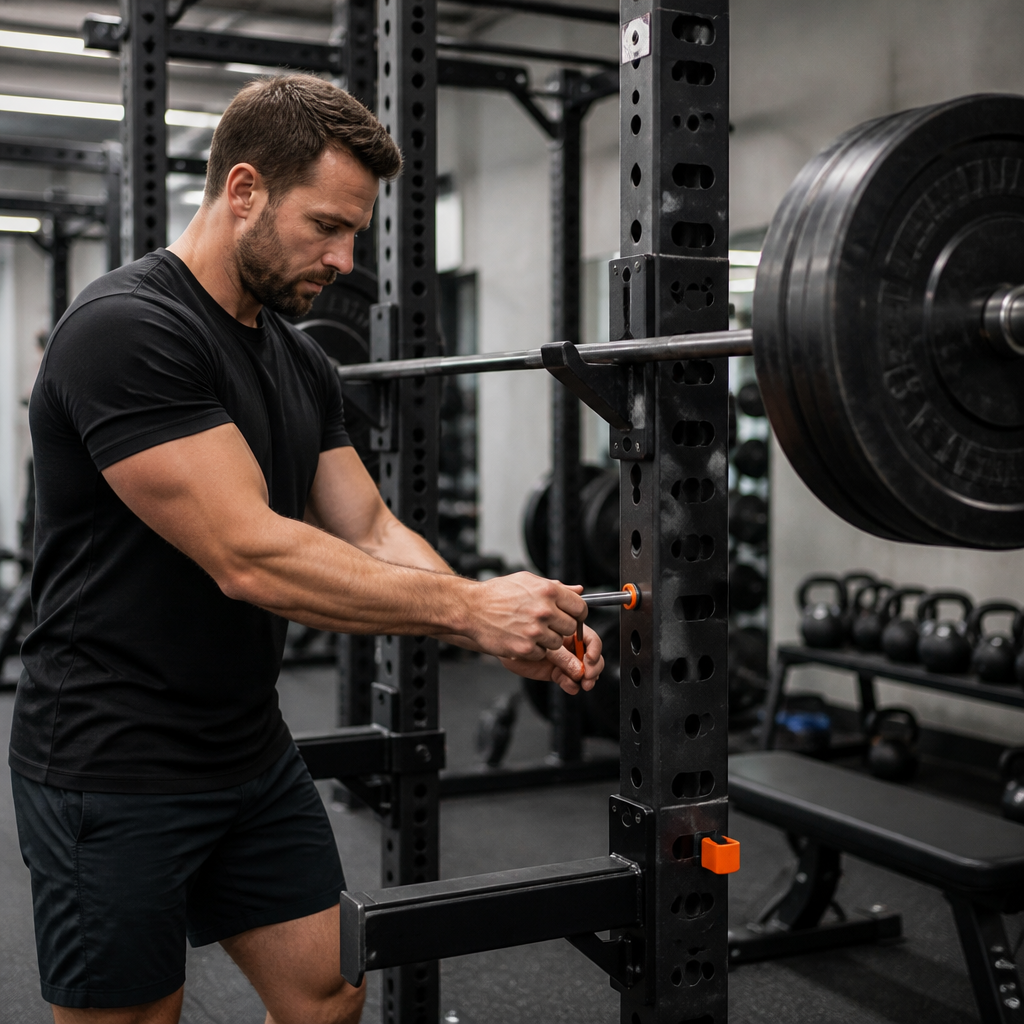
When the nights draw in and the temperature drops across Dewsbury, plenty of serious lifters start pushing harder indoors. Autumn is prime time for building strength, adding size, and getting locked into disciplined training before winter fully lands. But if you train hard, especially during quieter hours, one thing matters more than bravado, proper setup.
If you lift alone, safety pins are not there for decoration. They are one of the simplest ways to stop a bad rep becoming a serious injury. In an old-school gym environment, where heavy squats, presses and rack pulls are part of the weekly graft, knowing how to use them properly is basic lifting sense.
At The Muscle Pit, Venice Beach Dewsbury, serious training comes first. In a 24/7 gym, that means lifting with intent, but also with enough discipline to protect your body and stay under the bar for the long haul.
Why safety pins matter more when training alone
A lot of avoidable injuries happen because lifters assume they will grind through the rep, until they do not. Once fatigue hits, bar speed drops and technique slips. If there is no spotter, your rack setup becomes your backup.
Safety pins matter because they:
- catch the bar if you fail a rep
- give you confidence to train hard without reckless decisions
- reduce the risk of getting pinned under a load
- let you push compound lifts with more control
- help keep proper form from turning into panic movement
That last point matters. Proper form prevents gym injuries, but good form alone is not enough if the setup is wrong. A lifter with solid technique and poor pin height is still taking chances.
The right pin height for your main lifts
Different lifts need different pin positions. Guessing is where people go wrong.
Bench press
Set the pins slightly below the bottom of your pressing range when your chest is up and your shoulder blades are locked back. The bar should clear the pins during a normal rep, but if you fail, it should land on the safeties before it traps you.
Test this with an empty bar first. Lie in your proper bench position and lower the bar. If the pins touch too early, they are too high. If the bar sits on your chest before the pins catch it, they are too low.
Squat
For squats, the pins should sit just below your lowest safe squat depth. You want enough room to hit depth without crashing the bar into the rack, but not so much room that you get buried if you miss the lift.
If you train in a hardcore strength gym in Dewsbury, you already know heavy squats punish lazy setup. Before loading plates, step under the bar, squat to depth, and check the clearance.
Rack pulls and partials
If you use pins for rack pulls or partial movements, set both sides evenly and make sure the bar starts from a dead stop. Uneven pins throw off loading, shift your pull, and can drag your body out of line before the set even starts.
Common mistakes that make safety pins useless
Plenty of lifters use a rack every week and still get this wrong. Here are the mistakes that cause problems:
- Setting the pins too low. This is the biggest one. If the bar cannot be caught in time, the pins are doing nothing.
- Setting them by eye only. Always test with the empty bar first.
- Changing body position under fatigue. If your bench arch or squat depth changes wildly, your safeties may stop matching the lift.
- Ignoring even alignment. One side higher than the other can twist the bar during a failed rep.
- Training with ego instead of judgement. More weight does not mean much if your setup is careless.
Proper form prevents gym injuries, but it works best alongside the right equipment setup. Serious lifters respect both.
How autumn training can increase the risk of bad setup
October in West Yorkshire usually brings colder starts, stiffer joints, and heavier clothing on the way to the gym. That can affect how you move before you even touch the bar.
If you come in tight, rush your warm-up, or jump straight into top sets because you are training before work or late at night, you are more likely to misjudge rack height and bar position. In a 24/7 gym in Dewsbury, that matters. Early morning and late-night sessions can be productive, but only if you treat setup like part of the lift.
Before your heavier work sets this autumn, do these checks:
- check pin height with the empty bar
- make sure both sides are matched exactly
- test your actual lifting position, not a rushed version of it
- warm up until your movement looks sharp, not just until you feel awake
- keep collars, bench position and rack hooks organised before loading heavy
Safety pins support progress, they do not replace technique
Some lifters think using safeties is a sign of weakness. That is nonsense. Smart setup lets you train hard more consistently, which is what actually drives strength training and hypertrophy over time.
The disciplined fitness lifestyle is not about doing stupid things under load. It is about stacking solid sessions, week after week, with enough intensity to grow and enough control to stay healthy. That applies whether you are focused on bodybuilding, powerlifting, or simply getting brutally strong.
If you are looking for a serious training base with proper free weights, specialist strength equipment, and an old-school atmosphere that suits real lifters, The Muscle Pit, Venice Beach Dewsbury gives you the environment to train properly.
Final word
Heavy lifting on your own does not need to be reckless. Set your safety pins properly, test them before the weight gets serious, and treat your rack setup as part of your form. That is how experienced lifters keep progressing without turning one failed rep into weeks out of training.
Proper form prevents gym injuries, but setup is what gives that form protection when a set goes wrong. If you want a no-nonsense place for strength training in Dewsbury, with 24/7 access and a serious old-school culture, visit The Muscle Pit and train in an environment built for people who mean it.