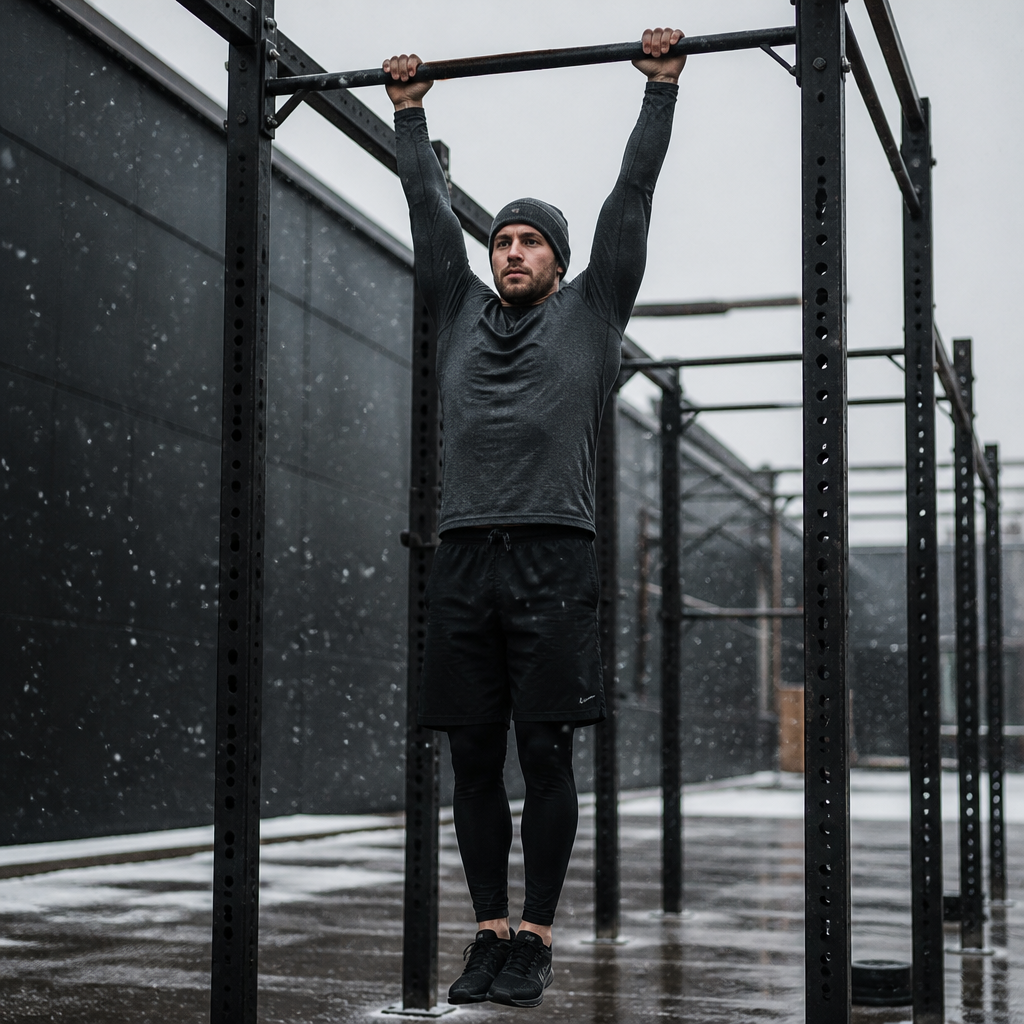
When November hits in Dewsbury, a lot of lifters start noticing the same thing. Grip feels slower to wake up, shoulders feel stiffer, and hanging work that looked easy in summer suddenly feels rough on the joints. That matters, because dead hangs are one of those simple drills that can either build stronger shoulders, tougher grip and better control, or become another way to irritate elbows and tweak tissues if you do them badly.
At The Muscle Pit, Venice Beach Dewsbury, old-school 24/7 gym, serious training means doing the basics properly. If you are using dead hangs to support heavy pulling, improve shoulder position or harden your grip for bodybuilding and powerlifting, your technique needs to be locked in.
Why dead hang form matters more in November
Cold mornings and colder late-night sessions can expose sloppy movement fast. In autumn and early winter, tighter upper backs, less mobile shoulders and rushed first sets often lead to poor hanging positions. That usually means lifters dump into the joints instead of controlling the position through the muscles.
Proper form prevents gym injuries because it keeps tension where it should be. With dead hangs, that means not letting your shoulders jam upwards uncontrolled, not twisting through the torso, and not turning a useful exercise into a passive stretch you are not ready for.
For serious lifters in Dewsbury and across West Yorkshire, that matters for more than comfort. Bad dead hang habits can interfere with:
- heavy pull-ups and chin-ups
- back training quality
- grip work for rows and deadlifts
- shoulder positioning on pressing days
- long-term upper body durability
What a proper dead hang should look like
A lot of people hear “just hang from the bar” and stop thinking there. That is where trouble starts.
A solid dead hang begins with control before your feet even leave the floor. Grip the bar evenly, set your hands to a width that suits your shoulder structure, and let yourself hang under control rather than dropping into the bottom.
Once you are hanging, keep these points in mind:
- Keep your ribcage down rather than flaring hard.
- Brace your midsection lightly so your body does not swing about.
- Let the shoulders open, but do not completely collapse into them.
- Keep your neck neutral instead of craning upwards.
- Maintain even pressure through both hands.
The goal is not to look dramatic. The goal is to build a stable, controlled hanging position that helps strength training, hypertrophy work and shoulder health.
Passive hang versus active control
This is where many lifters get it wrong. A passive hang has its place, but only if your shoulders tolerate it and you actually control the entry and exit. Most serious gym members will benefit from thinking about gentle active control instead of fully switching off.
That means allowing the body to hang, while still keeping some muscular engagement around the shoulders and upper back. Not a shrug. Not a half pull-up. Just enough control to stop the joints taking all the strain.
Common dead hang mistakes that lead to pain
If dead hangs have ever left your shoulders, elbows or wrists feeling beaten up, one of these is usually the reason.
Dropping straight into the bottom
Jumping up and suddenly loading cold tissues is a bad move in any season, and especially in November when joints and soft tissue often feel less ready. Step or jump up with control, then settle into position.
Hanging for too long too soon
More is not better if your position falls apart after fifteen seconds. Start with quality hangs, not marathon efforts. A shorter set with clean control does more for you than chasing time while your shoulders drift into a weak position.
Ignoring grip width and bar choice
Not every bar setup feels the same. Some lifters do better on a slightly different grip width, or on a thicker or more forgiving bar depending on training history. In a proper old-school gym with serious kit, you can find what lets you train hard without forcing bad positions.
Letting the body twist or swing
Once your torso starts rotating and your legs begin drifting, the hang stops being clean. That usually shows your brace, grip or shoulder control is slipping.
How to programme dead hangs without wrecking recovery
Dead hangs are useful, but they still need purpose. If you are already hammering heavy rows, pull-ups, shrugs and deadlifts, throwing in too much hanging work can tip tired tissues over the edge.
A smart approach for most dedicated gym-goers is:
- 2 to 3 sets after upper body training
- 10 to 30 seconds per set with strict control
- stop before pain, numbness or sharp joint discomfort
- build time gradually across several weeks
If your goal is grip strength, use them as support work. If your goal is shoulder tolerance and position, treat them as quality movement work, not an ego test.
That is the old-school way. Earn progress. Do not force it.
Who should be extra careful with dead hangs
Dead hangs are not a magic fix for everyone. Be cautious if you have:
- a history of shoulder instability
- current elbow irritation
- wrist pain under bodyweight loading
- numbness or tingling when hanging
- poor overhead mobility you have never addressed
In those cases, cleaner regressions and better exercise selection may be the smarter route until your position improves.
For lifters training at a serious gym in Dewsbury, access to proper equipment and a no-nonsense environment makes it easier to train around issues without quitting the work that matters.
Train hard, but do the basics right
Dead hangs look simple. That is exactly why people get careless with them. In a hardcore gym environment, basics still matter. Maybe more than ever. If you want bigger pulls, stronger grip, better upper body control and fewer setbacks this winter, your form has to stay disciplined even on the simplest movements.
At The Muscle Pit, serious lifters from Dewsbury and across West Yorkshire come to train with intent, proper kit and a real old-school atmosphere. If you want a place built for hard work, strength training and bodybuilding without the soft corporate nonsense, take a look at The Muscle Pit and see what real training feels like.