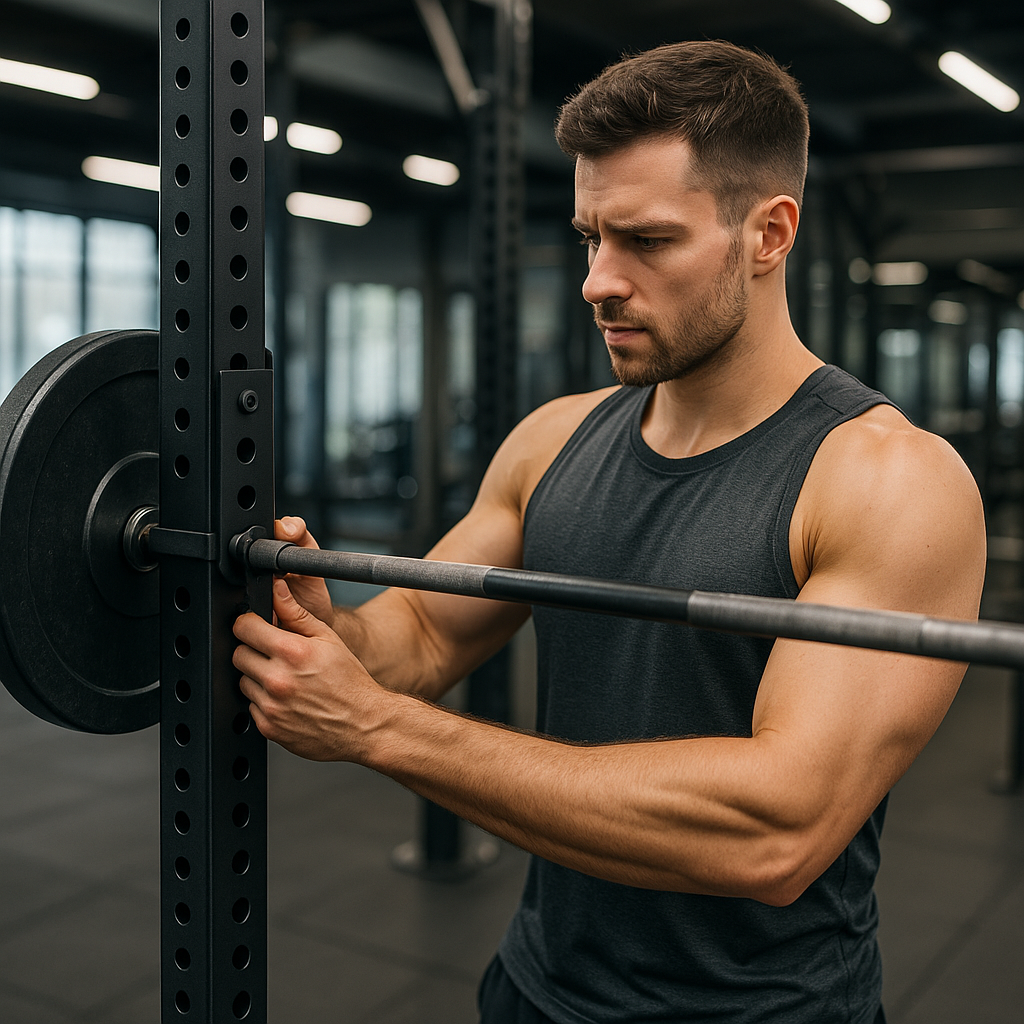
When lads talk about injury prevention, they usually jump straight to warm-ups, mobility, or whether they should drop the weight. Fair enough. But one thing gets ignored all the time, and it matters a lot if you train seriously. Your rack height.
Set it wrong, and you waste energy before the set even starts. You twist on the walkout, lose position on the unrack, or clip safeties on the way down. Over time, that is exactly the sort of sloppy setup that leads to missed lifts, beat-up shoulders, and avoidable knocks.
If you care about proper form preventing gym injuries, your setup has to be locked in before the first rep. At The Muscle Pit, Venice Beach Dewsbury, old-school 24/7 gym, that is basic gym discipline. In a serious strength training gym in Dewsbury, details matter.
Why rack setup matters more than most lifters think
A heavy squat, bench press, or overhead press does not begin when the bar moves. It begins when you get under the bar and take the weight out cleanly.
Bad rack height creates problems like:
- wasting strength on the unrack
- losing tightness before the first rep
- shrugging or pressing the bar out of position
- awkward walkouts that throw off balance
- smashing into safeties because they are too high
- going too low and getting trapped because they are too low
This is not glamorous stuff, but it is real. In an old-school gym culture, the basics are what keep you progressing. You do not need gimmicks. You need repeatable setup, proper lifting mechanics, and enough discipline to sort the small things out.
Squat rack height, where most mistakes happen
Squats go wrong fast when the hooks are set badly. Too high, and you end up on tiptoes to unrack. Too low, and you waste your legs half-squatting the bar out before the set starts.
The right height for squat hooks
For most lifters, the bar should sit just below shoulder height. You want to get tight under it, stand up strongly, and clear the hooks with as little movement as possible.
A good rule is this:
- Get under the bar in your normal squat stance.
- Brace hard and set your upper back.
- Stand up with a small, strong extension of the legs.
- Take one clean step back, then settle.
If you have to calf raise the bar out, the hooks are too high. If it feels like a mini squat before you even start, they are too low.
Safety arms for squats
Set the safeties high enough to catch the bar if you fail, but low enough that they do not interfere with a proper depth squat. Test this with an empty bar first. Hit your normal depth, stay braced, and check clearance.
For serious lifters training alone during quieter summer hours, especially with 24/7 gym access, this matters even more. June often means changed routines, later sessions, and people training around holidays and work cover. If you are lifting early or late, do not guess your safety setup.
Bench press setup, protect your shoulders and keep your groove
Bench press injuries are often blamed on bad pressing form, but poor rack position plays a big part. If the hooks are too high, you overreach to unrack and your shoulders roll forward. That is a bad start before the bar is even over your chest.
If the hooks are too low, you waste energy pressing out from a dead, cramped position.
How your bench hooks should feel
You should be able to unrack the bar by locking out and guiding it into position, not by performing a shoulder shrug and a half pullover.
Your ideal bench setup should let you:
- keep your shoulder blades pinned back
- maintain upper back tightness
- unrack without losing your arch or foot pressure
- return the bar to the hooks without hunting for them
That last point matters. A lot of shoulder tweaks happen when lifters finish a hard set in fatigue and then fumble the re-rack.
If your gym has quality free weights and proper specialist strength equipment, use them properly. Take thirty seconds to adjust the setup instead of rushing because the set is only one plate or because the gym is busy.
Overhead press and pin work, small setup changes make a big difference
With overhead pressing, bad rack height can batter your wrists, elbows, and upper back. If the bar starts too low, you waste energy hauling it into position. If it starts too high, you begin in a weak, unstable position.
The same goes for pin presses, rack pulls, and partial work. These movements are brilliant for powerlifting and heavy lifting, but only if the pins are set for the training goal.
Ask yourself:
- am I training the target range of motion
- can I start every rep in a strong joint position
- am I staying honest, or setting the movement up to ego lift
That is where proper form prevents gym injuries in the real world. Not in theory, in the setup choices you make every session.
Common rack setup mistakes to stop this summer
Summer brings more disrupted routines. People train at odd times, rush in before weekends away, or try to squeeze heavy sessions into a packed day. That is when standards slip.
Watch for these common mistakes:
- using somebody else’s rack settings without checking them
- leaving safeties in the wrong position because you are in a hurry
- changing footwear and not adjusting setup height
- rushing the walkout because the gym floor feels busy
- treating lighter warm-up sets seriously, then guessing once the weight gets heavy
Whether your goal is bodybuilding and physique development or pure strength, consistency in setup protects your joints and keeps your movement sharp.
Build a serious routine before every heavy set
Before your main lift, run through this quick check:
- Are the hooks at the correct height for a clean unrack?
- Are the safeties set for the lift and your real depth or bar path?
- Can you re-rack safely under fatigue?
- Have you tested the setup with an empty bar or warm-up weight?
- Are you training with the same discipline on every set?
That is the stuff that separates proper gym memberships in Dewsbury from casual training. In a hardcore environment, you earn progress by respecting the details.
If you want a serious place to train with a no-nonsense atmosphere, proper equipment, and the freedom to lift on your schedule, check out The Muscle Pit in Dewsbury. For lifters across West Yorkshire who care about strength, hypertrophy, and training the right way, The Muscle Pit gives you the environment to do it properly.