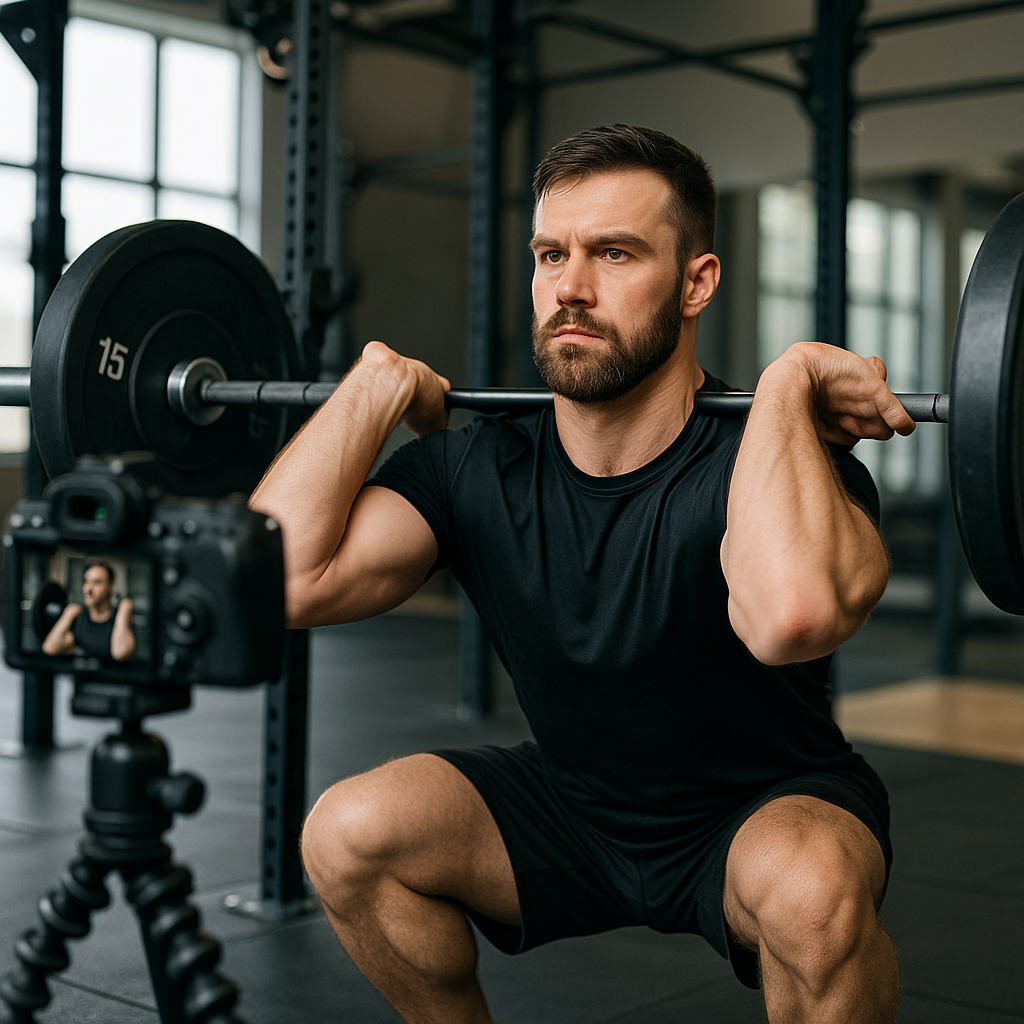
Serious training means being honest. If your squat shifts, your bench path goes wild, or your deadlift turns into a hitching mess once the weight climbs, you need more than guesswork. One of the simplest ways to tighten your technique and cut down the risk of injuries in the gym is to film your lifts properly and actually study what is going on.
At The Muscle Pit, Venice Beach Dewsbury, Old-School 24/7 Gym, that old-school mindset still matters. Train hard, lift with intent, and fix what is weak. In June, when routines get knocked by holidays, hot days and broken schedules, filming your sets can keep your standards high even when life gets messy.
Why filming your lifts matters more in summer
Summer sounds easy on paper, but for serious lifters in Dewsbury and across West Yorkshire, it often throws training off line. Late nights, weekend plans, travelling, and warmer gym sessions can all chip away at focus. That is when bad habits creep in.
When concentration drops, form usually slips first. You might not feel a small hip shift in the squat. You might not notice your elbows flaring too early on bench. You might think your deadlift lockout is clean when it is really your lower back taking over.
Filming gives you proof, not opinions. It helps you:
- spot technical errors before they become painful problems
- see whether fatigue is changing your movement pattern
- compare warm-up sets to heavy work sets
- track if your lifting form is improving over time
- stay accountable when training at odd hours with 24/7 gym access
For anyone focused on strength training, hypertrophy, bodybuilding or powerlifting, that matters.
The best angles to film for useful feedback
Bad footage is nearly as useless as no footage. If the camera is pointing at the ceiling or blocked by plates, you will miss the details that actually matter.
Squat and lower body work
Film from a rear-side angle, roughly 45 degrees behind you. This helps you check:
- depth
- bar path
- knee tracking
- hip shift
- torso position
For split squats, leg presses and hack squats, use a side angle if you want to judge range and body position more clearly.
Bench press and pressing work
For bench, a side angle works well to assess:
- bar path
- touch point
- elbow position
- wrist stacking
- leg drive consistency
A front-side angle can also help if you are checking whether one arm locks out earlier than the other.
Deadlifts and rows
For deadlifts, film from the side or a slight front-side angle. You want to see:
- start position
- bar distance from the body
- hip height
- back position
- lockout quality
For rows, use a side angle so you can tell whether you are actually loading the back or just jerking the weight around.
What to look for when reviewing your footage
Do not just watch the rep and say, that looked fine. Break it down.
Check these five things first
- Set-up. Are your feet, hands, back and brace in the right place before the lift even starts?
- Bar path. Is the bar travelling efficiently, or drifting away and wasting force?
- Balance. Are you staying planted, or rocking on heels and toes?
- Tempo. Are you controlling the rep, especially on the lowering phase?
- Symmetry. Is one side taking over, twisting, or locking out ahead of the other?
This is where proper form helps prevent gym injuries. Most problems do not appear out of nowhere. They build from repeated sloppy reps, rushed set-ups and ignored warning signs.
Common mistakes lifters miss on camera
Even experienced lifters can miss obvious faults while they are under the bar. A video slows everything down and exposes it.
The most common issues include:
- cutting squat depth as the weight gets heavier
- knees caving in during hard reps
- losing upper back tightness on bench press
- bouncing the bar off the chest with no control
- deadlifting with the bar too far from the shins
- overextending at lockout instead of finishing through the glutes
- rushing reps because the set feels heavy
If you train in a serious environment with proper free weights and specialist strength equipment, these details matter even more. Heavy lifting rewards discipline and punishes laziness.
How to fix form without overthinking every rep
You do not need to turn every session into a sports science project. You just need a system.
Use this simple process:
- Film one top set and one back-off set for your main lift.
- Review the clips between exercises, not between every single set.
- Pick one fault only to correct in the next session.
- Lower the load slightly if needed and groove the change.
- Film again the following week and compare.
That keeps your training practical. No drama, no paralysis, just honest correction.
If you notice the same issue for three or four weeks in a row, stop pretending it will sort itself out. Strip the weight back, tighten your set-up, and rebuild it properly.
Filming etiquette in a hardcore gym
There is a right way to do it. In a proper gym atmosphere, people are there to work.
Keep it simple:
- set your phone up where it does not block walkways
- do not film other members unnecessarily
- keep clips short and focused on your lift
- review your footage quickly, then get back to training
At The Muscle Pit, Venice Beach Dewsbury, Old-School 24/7 Gym, the culture is about serious training, not posing for social media. Use filming as a tool to sharpen your technique, not to waste time.
Better technique builds longer-term progress
Anyone can force ugly reps for a week or two. The real goal is to train year-round, stay strong, and keep building size without getting broken off by preventable mistakes.
If you are looking for a serious gym membership in Dewsbury, and you want a place where hard work, proper lifting, and a disciplined fitness lifestyle still mean something, The Muscle Pit is built for that kind of training.
Come and train in a no-nonsense environment with 24/7 access, proper equipment, and a hardcore atmosphere that rewards lifters who want to do things right.