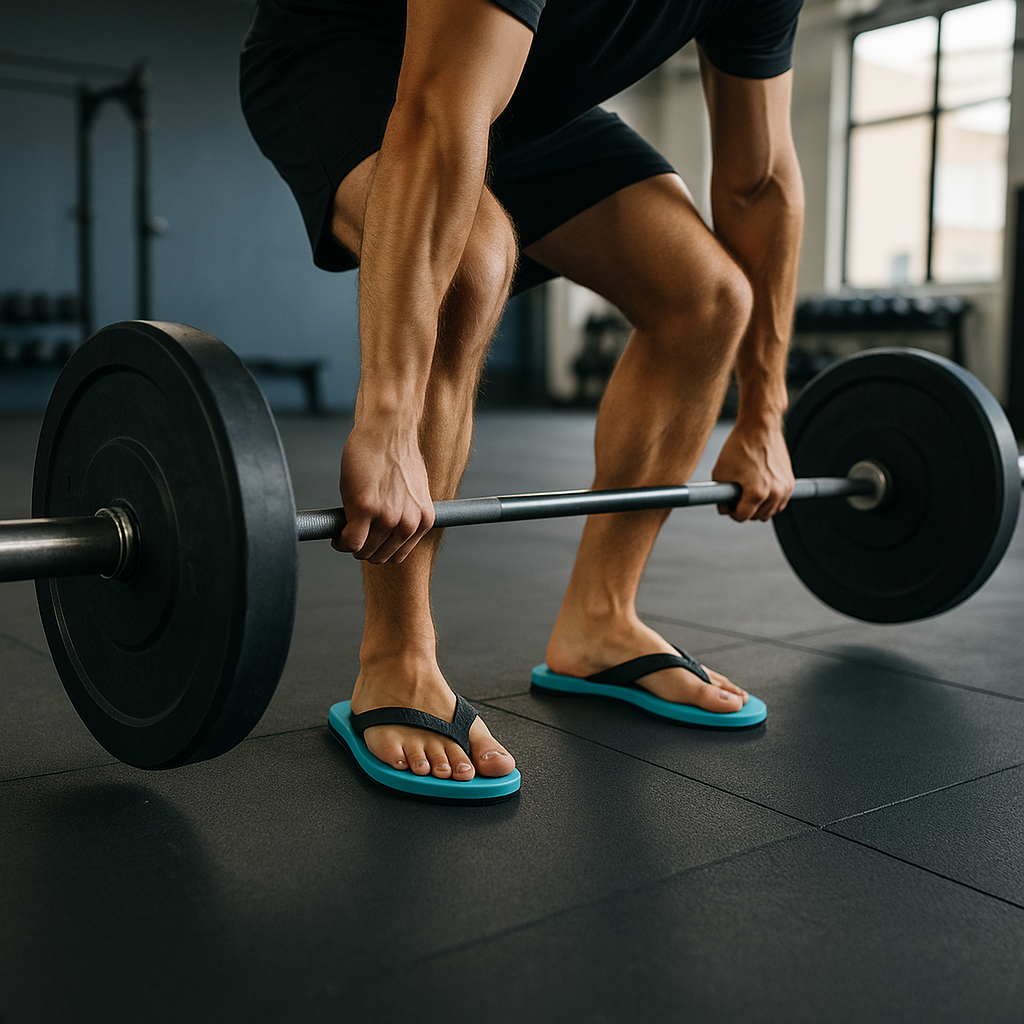
When July hits West Yorkshire, a lot of lifters get casual. Shorts come out, routines shift, and some people walk into the gym dressed more for a trip into town than a serious session under the bar. That is where problems start.
If you care about strength, size and staying injury-free, your footwear matters more than most people realise. In an old-school gym environment, where heavy squats, deadlifts, presses and machine work all demand solid positions, bad shoes can throw off your setup before the first rep even starts. Proper form prevents gym injuries, but proper form starts from the floor up.
At The Muscle Pit, Venice Beach Dewsbury, serious lifters know that stable training is not about looking trendy. It is about keeping your base locked in so your technique stays tight when the weight gets heavy.
Why summer footwear causes more lifting problems
In July, people are more likely to train in lighter, softer or less supportive shoes. That might feel comfortable walking in from the car park, especially on warm days in Dewsbury, but comfort is not the same as stability.
Soft trainers, worn-out soles and sloppy footwear can all create movement where you do not want it. When your foot rolls, compresses or shifts under load, your knees, hips and lower back often pay the price.
This gets even more important if you train early, late or around a packed summer schedule. With 24/7 gym access, plenty of dedicated lifters train before work, after long shifts or around holidays. When you are tired or short on time, small setup mistakes become bigger ones. Bad footwear is one of the easiest mistakes to fix.
The biggest footwear errors lifters make
1. Wearing cushioned running shoes for heavy lifts
Running shoes are built for forward motion and impact absorption. That is the opposite of what you want for squats, deadlifts and standing presses. Thick cushioned soles can make you unstable and change your mechanics.
Under load, that soft sole compresses. Your heel may wobble, your foot pressure may shift, and your bar path can drift. If you are trying to build serious strength or improve hypertrophy work with controlled reps, that is bad news.
2. Using worn-out trainers past their best
A lot of lifters hang on to old trainers for too long. The upper might still look fine, but the sole can be uneven, compressed or tilted. That means one side of your body may be working from a different position than the other.
Over time, this can feed into poor squat depth, uneven deadlift starts and awkward pressing mechanics. Proper form prevents gym injuries, but worn footwear quietly chips away at that form set after set.
3. Switching shoes depending on what looks good
This one is simple. Fashion has nothing to do with performance in the weights area. If your shoes change every session, your setup changes too. Serious lifters do better with consistency.
You want to know how your feet feel on the floor, how your stance lands, and how your weight distributes through every rep. That takes repeatability, not random choices.
What good lifting footwear should do
The right shoe depends on your training style, but for most serious gym-goers in Dewsbury, you want a few basics:
- A firm, stable sole
- Minimal unwanted compression
- Good grip on the floor
- A secure fit through the midfoot
- Enough structure to keep your setup consistent
For deadlifts, many lifters prefer flatter shoes because they keep you closer to the floor. For squats, some may prefer a raised heel if it helps them hit better positions while keeping form solid. The key point is not copying someone online. It is choosing footwear that helps you lift with control.
How footwear affects common lifts
Squats
If your foot is unstable, your knees may cave, your arches may collapse, and your torso position can drift. That is when depth becomes inconsistent and heavy sets start looking messy.
Deadlifts
A soft sole can push you out of position before the bar leaves the floor. That makes it harder to create tension and easier to lose a strong starting position.
Standing presses and machine work
Even upper-body training needs a solid base. If your feet are moving, your bracing suffers. On heavy overhead work especially, that can lead to poor force transfer and sloppy reps.
A quick check before your next session
Before you load the bar, ask yourself:
- Does the shoe feel stable under pressure?
- Is the sole even, or badly worn on one side?
- Can you grip the floor properly?
- Does your foot slide inside the shoe?
- Would you trust this setup on your heaviest working sets?
If the answer to any of those is no, sort it out before your next heavy day.
Serious training means thinking beyond the barbell
Old-school lifting is not complicated, but it does demand discipline. You cannot talk about strength training and hypertrophy while ignoring the basics that hold your technique together. Foot position, balance and setup all matter.
That is especially true in a hardcore gym where people come to train properly. In a serious training atmosphere, details count. Footwear is one of those details that can either sharpen your lifting or slowly drag it backwards.
If you are training for bodybuilding, powerlifting or just pushing to build a stronger physique this summer, do not let weak kit choices undermine strong training habits. Proper form prevents gym injuries, and the floor is where that form begins.
Train hard, but train on a solid base
If you want a no-nonsense place to train in WF13 1LD, with proper free weights, specialist strength equipment and a real old-school environment, take a look at The Muscle Pit in Dewsbury. Whether you are chasing size, strength or cleaner execution on your big lifts, the right setup matters.
Ready to train in a gym built for serious lifters, not casual dabblers? Visit The Muscle Pit, Venice Beach Dewsbury and get yourself into an environment where hard training still means something.