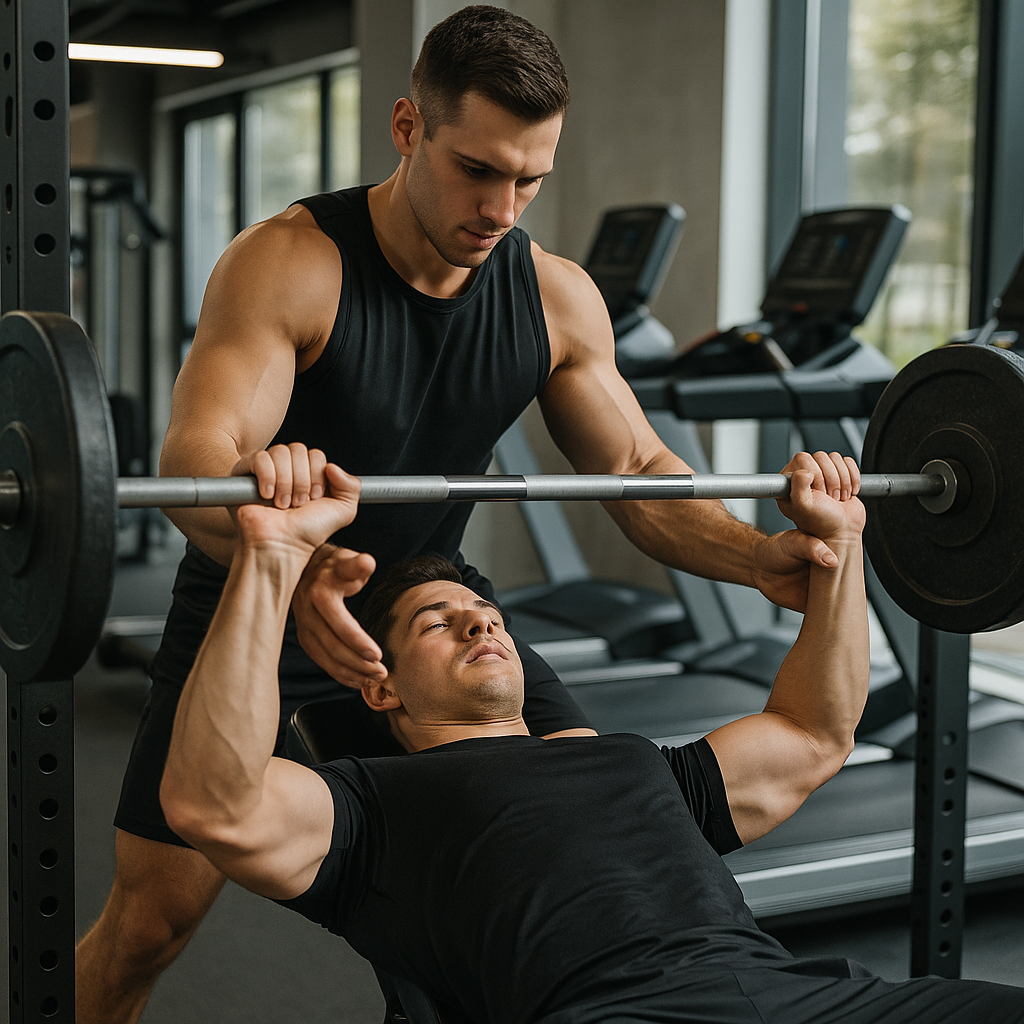
If you train hard, sooner or later you will push into weights that demand more than confidence. They demand discipline. One of the most overlooked parts of proper form that prevents gym injuries is knowing when to use a spotter, and how to use one properly.
In July, routines get messy. People train at odd hours, holidays throw programmes off, and hot weather can leave you a bit flatter than usual under the bar. That is when sloppy decisions creep in. A missed hand-off, a clueless spot, or no spot at all can turn a solid session into weeks on the sidelines.
At The Muscle Pit, Venice Beach Dewsbury, Old-School 24/7 Gym, the culture is simple. Train hard, train properly, and respect the lift. If you are serious about strength training and hypertrophy, learning how to work with a spotter is part of the job.
Why spotting matters more when the weights get serious
A good spotter does not lift the bar for you. They help create a safer environment so you can complete the rep with proper mechanics, or get out of trouble fast if the lift breaks down.
That matters for bodybuilders chasing progressive overload, and it matters just as much for powerlifters and strong intermediate lifters pushing top sets.
Using a spotter well can help you:
- stay tighter during heavy attempts
- maintain better bar path and position
- avoid panic when a rep slows down
- reduce the chance of failed lifts turning into strains or impact injuries
- train hard without turning every session into ego lifting
For anyone focused on proper form preventing gym injuries, spotting is not a backup plan for bad technique. It is a safety layer that supports good technique when the set gets brutally hard.
When you actually need a spotter
Not every lift needs one. In fact, dragging someone over for every set can be pointless if the exercise already has a safe bail-out option. But there are times when a spotter makes perfect sense.
Lifts where a spotter is most useful
A spotter is especially valuable on:
- Barbell bench press
- Heavy incline press
- Dumbbell presses where getting into position is the risky part
- Very hard squat sets, if the spotter knows exactly what they are doing and safeties are set correctly
On movements like deadlifts, rows, machine work, and many accessory lifts, a spotter usually is not necessary. Good set-up, sensible loading, and proper control matter more.
Times to ask for one
Ask for a spotter when:
- you are going close to failure on a compound press
- you are testing a heavy top set
- you feel slightly off because of poor sleep, summer heat, or disrupted routine
- you are coming back after time away and confidence is not fully there yet
That is common in Dewsbury and across West Yorkshire this time of year. People are juggling work, travel, family plans and hotter training conditions. There is no glory in pretending every day is a peak-performance day.
How to communicate before the set
Most bad spotting happens before the bar even moves. No plan, no cues, no idea what help is actually wanted.
Before you lift, tell your spotter three things:
- how many reps you are aiming for
- whether you want a hand-off
- when you want help, only if the bar stalls, or the second form breaks badly
Be specific. Saying, “Give me a lift-off, then do not touch it unless it stops,” is far better than saying, “Just spot me.”
For serious lifters in an old-school gym in Dewsbury, that level of clarity should be standard. Heavy training is not guesswork.
What good spotting looks like on the bench press
The bench press is where spotting mistakes cause the most problems. Too much help ruins the set. Too little awareness can leave the lifter pinned.
A proper bench spotter should:
- stay locked in for the whole set
- help with the hand-off only if agreed
- keep hands close, but not touching the bar
- watch the bar path and the lifter’s control
- step in quickly if the rep stalls or drops
The lifter still has a job to do. Keep your upper back tight, feet planted, and shoulders set. A spotter cannot fix loose positioning halfway through a bad rep.
This is where proper form in the gym prevents injuries in real terms. Tight set-up, clear communication, and a competent spot can stop a failed rep becoming a shoulder, pec, or wrist issue.
What not to do when spotting
A bad spotter is worse than no spotter. Straight-talking truth.
Avoid these mistakes:
- grabbing the bar too early and turning the set into a forced-rep mess
- chatting to others while someone is lifting
- standing too far away to react in time
- using fingertips on the bar throughout the set
- helping unevenly, which twists the bar and the lifter’s shoulders
- agreeing to spot a lift you do not understand
If you are the one asking for help, do not pick the nearest body in the gym. Pick someone switched on, experienced, and paying attention.
Spotting and gym culture
In a proper hardcore gym, spotting is part of the culture. Not because people need babysitting, but because serious training means respecting risk.
That old-school mentality still matters. You earn progress through good habits, not reckless loading. You look after your training partners. You learn how lifts should move. You know when to push, and when to save the rep and live to fight another session.
That is a big part of what draws committed lifters to specialist gyms instead of soft, corporate fitness centres. Real strength training comes with standards.
Build safer progress, not just bigger numbers
If you want long-term progress in bodybuilding, powerlifting, or serious strength work, treat spotting like a skill. Learn when to ask for help. Learn how to give help. Keep your communication sharp and your ego under control.
Doing that will support better training quality, better confidence under the bar, and fewer avoidable setbacks. In other words, it is one more way proper form prevents gym injuries and keeps you progressing.
If you want a serious place to train in WF13 1LD, with the right atmosphere for hard work and disciplined lifting, check out The Muscle Pit. If you are after an old-school gym membership in Dewsbury where heavy training is taken seriously, The Muscle Pit, Venice Beach Dewsbury, Old-School 24/7 Gym is built for exactly that. Join The Muscle Pit and train in an environment where proper lifting still matters.