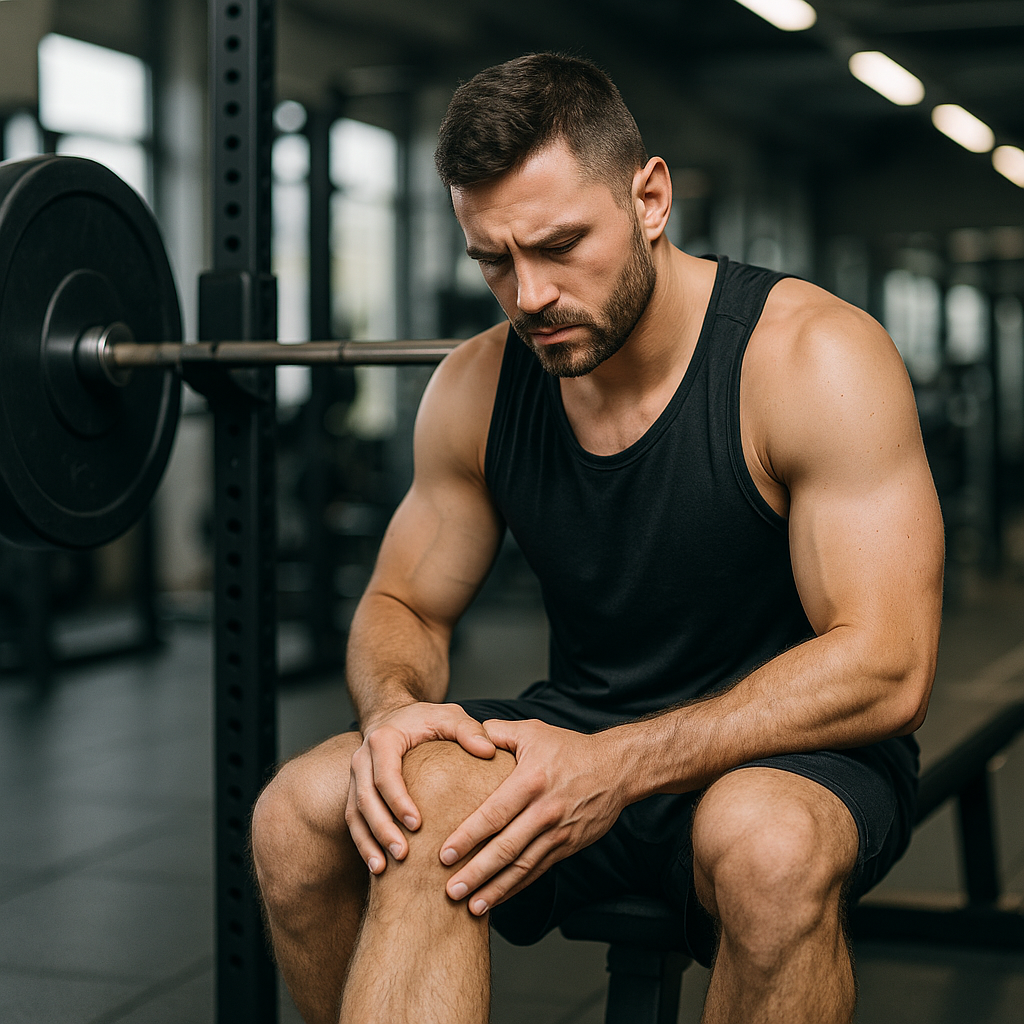
Knee pain can kill progress fast. One week you are pushing hard on squats, lunges and leg presses, the next you are cutting depth, dodging leg day, and wondering why your numbers have stalled.
For serious lifters in Dewsbury, July often brings a different training rhythm. More daylight, changed work patterns, holidays and extra sessions can all mean more volume on your lower body work. That is where trouble starts. If your movement is sloppy, your set-up is lazy, or your exercise selection does not match your structure, your knees usually let you know.
At The Muscle Pit, Venice Beach Dewsbury, Old-School 24/7 Gym, the goal is simple. Train hard, train properly, and keep your body strong enough to come back tomorrow. Proper form prevents gym injuries, and that matters even more when heavy summer training ramps up.
Why knee pain shows up in summer training blocks
Most lifters do not suddenly develop bad knees in July. What usually happens is a build-up of small mistakes.
Common triggers include:
- increasing squat or leg press volume too quickly
- chasing numbers before your movement is locked in
- rushing your warm-up because the gym is quieter late at night
- swapping stable footwear for softer summer trainers
- adding outdoor activity, extra steps or sport on top of hard leg sessions
- training through tight hips and ankles without fixing the cause
If you are serious about strength training and hypertrophy, your knees are caught between the floor and the load. When your feet, ankles, hips or bar path are off, the knees often take the hit.
The biggest form mistakes that flare up your knees
Knee pain is not always about one exercise. It is often about how you perform the movement.
Letting the foot collapse
If your arches cave in and your foot rolls inward, the knee usually follows. That puts stress through the joint and makes heavy reps feel rough and unstable.
Think about driving the whole foot into the floor. Heel, big toe, little toe. Stay planted. Serious lifting starts from the ground up.
Knees caving during squats and presses
A slight inward drift can happen under fatigue, but repeated collapse is a red flag. It often points to poor control, weak glutes, or too much weight for the quality of the rep.
Your knees do not need to stay unnaturally wide, but they should track in line with your toes. If they are folding in hard, strip the load back and rebuild the pattern.
Cutting depth to dodge discomfort
Half-repping around pain rarely fixes anything. It usually changes the stress rather than removing it.
Depth should match your mobility and control. If you can only reach a certain range without your pelvis tucking under or your knees shifting badly, work there cleanly, then improve from that base.
How to train legs hard without battering your knees
You do not need to stop training lower body because your knees are irritated. You need to train smarter and tighten up execution.
Clean up your exercise order
Do the lifts that demand the most control when you are fresh. If heavy squats come after sloppy high-rep leg work, your form can fall apart quickly.
A better order might look like this:
- controlled warm-up sets
- primary squat or hack squat pattern
- secondary hinge or unilateral movement
- machine work for quads or hamstrings
- calves and accessory work
That keeps the technical work early and reduces the chance of ugly reps.
Use the right variation for your build
Not every lifter is built the same. Some feel better with a high-bar squat, some with a box squat, some with a hack squat, and some with split squats as their main quad builder for a phase.
The old-school mindset is not about forcing one exercise no matter what. It is about finding the movement you can load hard, control properly, and progress over time.
Slow the lowering phase
If you drop into the hole and bounce without control, your knees can take more punishment than they need to. A steady lowering phase helps you own the rep, stay stacked, and feel where your position is going wrong.
This is one of the simplest ways proper form prevents gym injuries. It exposes weak positions before heavy weight turns them into a problem.
Mobility issues that often sit behind knee pain
A painful knee is not always the real problem. Sometimes the issue starts above or below it.
Look closely at:
- ankle mobility, especially if your heels lift or your stance feels unstable
- hip control, especially if your knees drift around at the bottom of squats
- quad and adductor tightness after increased summer activity
- poor recovery when holiday schedules cut sleep and meal quality
If your ankles are stiff, your knees may compensate. If your hips are tight, your squat path may get messy. In a serious training atmosphere, honesty matters. Do not just load dysfunction and hope it sorts itself out.
When to push and when to back off
There is a difference between training discomfort and warning-sign pain.
Back off and reassess if you notice:
- sharp pain during descent or lockout
- swelling around the joint
- pain that worsens set by set
- instability or a feeling of giving way
- lingering pain for days after leg work
That does not mean stop moving altogether. It means adjust the exercise, reduce load, shorten range if needed, and rebuild quality. Serious lifters know discipline is not just adding plates. It is knowing when to pull back before a small issue becomes months out of proper training.
Build a knee-friendly leg session this July
If your routine has been thrown off by summer holidays, late-night sessions or extra activity outside the gym, keep your lower body training simple and sharp.
A solid approach in Dewsbury this month is:
- start with 5 to 10 minutes of gradual warm-up work
- use progressive build-up sets before your top working weight
- choose one main squat pattern and one support movement
- keep reps controlled, especially on the way down
- stop chasing load if your tracking or foot pressure goes off
- recover properly between leg sessions
For lifters around WF13 1LD looking for a proper bodybuilding and strength gym, the environment matters too. Good equipment, plenty of free weights, and space to train without gimmicks all help you focus on execution.
If you want a hardcore place built for serious training, have a look at The Muscle Pit in Dewsbury and see what an old-school setup should feel like. For committed gym memberships in Dewsbury, it is about access, equipment and atmosphere that suit real lifters.
Final word
Knee pain is often a technique problem before it becomes an injury problem. Clean foot pressure, better tracking, controlled reps and smarter exercise selection go a long way. Proper form prevents gym injuries, and it also keeps your progress moving when everyone else is backing off leg day.
If you want to train in a no-nonsense environment with 24/7 access, specialist strength equipment and a serious lifting culture, visit The Muscle Pit, Venice Beach Dewsbury, Old-School 24/7 Gym.