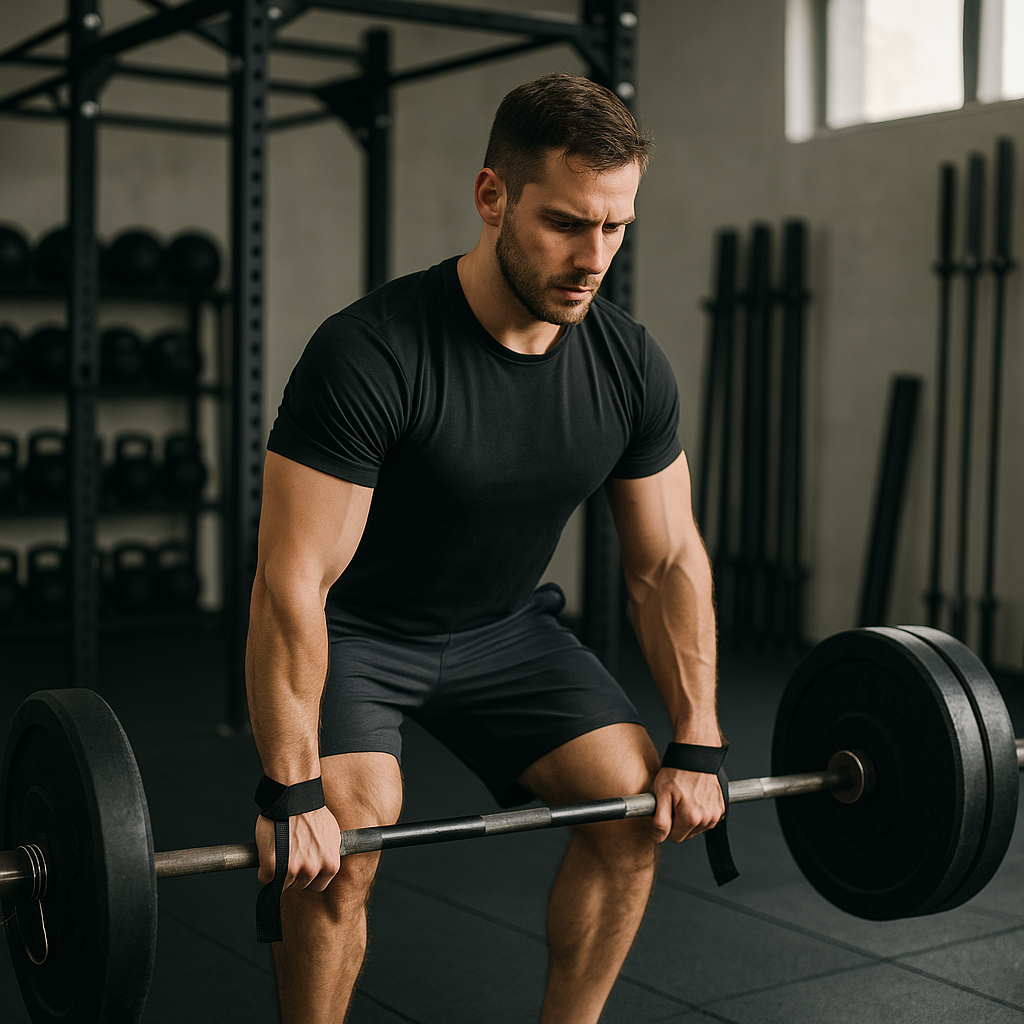
When September rolls in and the weather starts turning in Dewsbury, a lot of lifters get back under heavier bars with fresh focus. That is a good thing, but it also brings a common mistake. People start leaning on lifting straps for every pull, every row and every heavy set, then wonder why their technique goes off and little pains start creeping in.
Used properly, straps can help you push your back work, keep your target muscles doing the job and stop grip from limiting productive sets. Used badly, they can cover up weak points, throw off your pulling mechanics and increase the chance of picking up avoidable gym injuries. Proper form prevents gym injuries, and that still applies when you add kit into the mix.
At The Muscle Pit, Venice Beach Dewsbury, the approach is simple. Use tools for a reason. Do not let them use you.
What lifting straps should actually do
Lifting straps are not magic. They are there to help on movements where your hands give up before the bigger muscles you are trying to train.
That usually means:
- heavy rows
- Romanian deadlifts
- pull-down variations
- shrugs
- high-volume back work
- some bodybuilding-focused deadlift assistance
They are not a replacement for building grip strength. They are also not an excuse to stop paying attention to hand position, shoulder position or bar control. In a serious strength training gym, every piece of equipment should serve the lift, not hide bad habits.
If your form changes the second straps go on, that is the first warning sign.
The biggest strap mistakes that mess up technique
A lot of lifters in hardcore gyms train hard, but hard training only works when it is disciplined. These are the mistakes that often lead to poor movement and unnecessary strain.
Wrapping too loosely
If the strap is loose, the bar moves before you do. That creates slop in the first part of the rep and can pull your shoulders out of position. On rows and hinges, that matters.
You want the strap secure enough that the bar feels connected to your hand, but not so tight that you rush your set-up and forget your body position.
Using straps too early in the session
If you throw straps on from the first working set, you can end up avoiding grip work you actually need. For lifters chasing better physique development or more pulling strength, that is lazy training.
A better approach is to train without straps until grip starts becoming the limiting factor, then bring them in for your heaviest or highest-rep work.
Letting straps pull you into bad positions
This happens a lot on heavy barbell rows and machine rows. Instead of driving the elbows and controlling the upper back, some lifters just hang off the straps and yank. That turns a productive back set into messy momentum.
Proper form prevents gym injuries because it keeps force where it belongs. If the neck is craned up, shoulders are rolling forward and the lower back is taking over, straps are not helping. They are hiding a problem.
How to use straps properly on pulling lifts
The goal is simple. Keep your technique clean, keep tension on the right muscles and stop grip failure from ruining the set.
Before the rep starts
Set the strap so the bar sits where you can still feel control through the hand. Then:
- grip the bar first
- wrap the strap tightly and evenly
- set your shoulders down and back where needed
- brace your torso
- start the rep without jerking the weight
That sequence matters. If you wrap first and rush everything else, your body set-up usually suffers.
During the rep
Whether you are doing rows, RDLs or machine pulls, think about leading with the elbows and keeping the bar path controlled. Do not let the strap turn the movement into a hitch-and-heave job.
This is especially important in an old-school gym full of free weights and specialist strength kit. Serious equipment deserves serious technique.
When straps help, and when they are a bad idea
Straps are useful when your back, glutes or hamstrings still have more to give, but your hands are done. That is common on hypertrophy work where the target is muscle fatigue, not a grip test.
They are a bad idea when:
- you use them on every set automatically
- your grip is weak because you never train it
- your set-up falls apart once the weight gets heavy
- you are using momentum instead of controlled reps
- you are masking pain rather than fixing the cause
For powerlifting and heavy lifting, there is a difference between assistance and dependency. Know the difference.
Why this matters more in September
As autumn starts in West Yorkshire, routines sharpen up again. People get back from summer distractions, training intensity rises and heavier blocks begin. That makes September a prime time for little technical issues to become bigger ones.
Cooler mornings can also make lifters rush through their first few movements just to get warm. Then straps go on, the weight jumps up and form gets sloppy. In a 24/7 gym in Dewsbury, that can happen whether you train before work, late at night or in the middle of the day.
The answer is not to back off serious training. The answer is to train properly. Proper form prevents gym injuries, and it keeps your progress moving when the weights start climbing again.
Build strength the old-school way
If you are serious about bodybuilding, powerlifting or no-nonsense training, every tool in your gym bag should have a purpose. Straps can help you overload the right muscles and get more from back sessions, but only if your technique stays locked in.
Train your grip. Use straps when they are earned. Keep your positions solid. Make every rep look like it belongs in a proper lifting gym.
If you want a hardcore place to train with real equipment, real atmosphere and 24/7 access, take a look at The Muscle Pit in Dewsbury. If you are ready for serious training in a true old-school environment, see what The Muscle Pit is about and get yourself into a gym that matches your mindset.