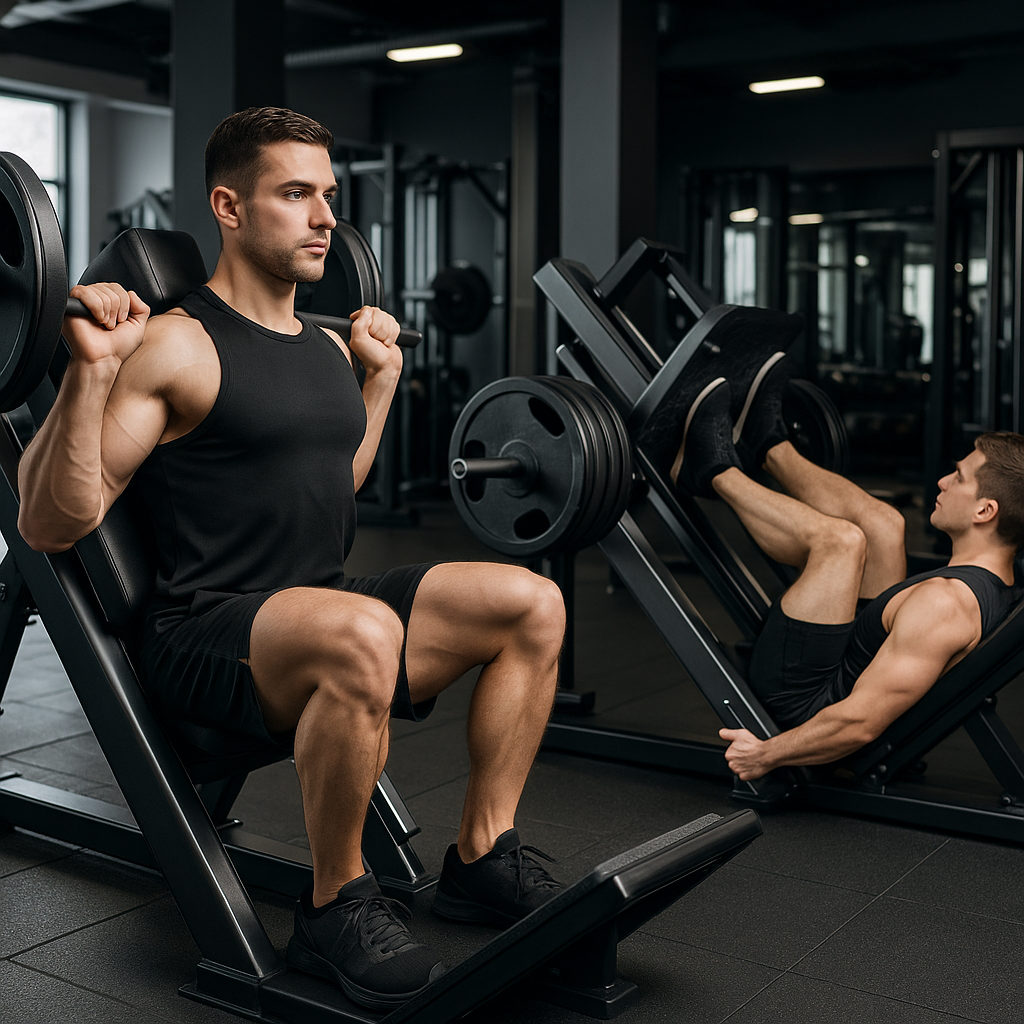
When autumn hits in Dewsbury and the colder mornings start creeping in, a lot of lifters dig back into hard lower-body sessions. More food, more layers, more drive to grow. That is usually when hack squats and leg press work starts getting heavier, sloppier, and more dangerous.
If you are serious about building size and strength, proper form on machine leg work still matters. A lot. Just because the movement is guided does not mean it is foolproof. In a serious gym environment, where the aim is real progress and not messing about, clean execution is what keeps you training hard week after week.
At The Muscle Pit, Venice Beach Dewsbury, plenty of lifters use plate-loaded and specialist strength equipment to hammer quads without sparing effort. The key is knowing how to push hard without letting your form fall apart.
Why machine leg work still causes injuries
There is a bad habit in some gyms of treating hack squats and leg press like safe shortcuts. Load it up, grind out ugly reps, hope for the best. That mindset gets people hurt.
Machines can reduce some variables, but they also let you pile on more weight than you can properly control. Once your lower back rounds, your hips tuck under, or your knees cave in, the set stops being productive and starts becoming risky.
This is where proper form prevents gym injuries. Not by making training easy, but by making your heavy work precise. In old-school bodybuilding and strength training, discipline always beats ego.
How to set up the hack squat properly
Hack squats can be brutal in the best way, if you are set up right from the first rep.
Foot position matters
Start with your feet around shoulder width, with toes turned slightly out if that feels natural for your hips. Too narrow and your knees may track poorly. Too high or too low on the platform and you can shift stress away from the target muscles or force awkward joint positions.
A good rule is simple. Put your feet where you can hit depth without your heels lifting or your pelvis rolling under.
Keep your body locked in
Your upper back should stay braced against the pad, your core tight, and your head in a neutral position. Lower the weight under control. Do not dive into the bottom.
As you descend, your knees should track in line with your toes. As you drive up, push through the mid-foot and heel, and keep tension on the quads instead of bouncing out of the hole.
Common mistakes on hack squats include:
- Letting the knees collapse inward
- Cutting depth short to move more weight
- Slamming into the bottom position
- Locking out hard and resting between reps
- Lifting the heels or shifting onto the toes
If any of that is happening, the answer is not more plates. It is better control.
How to use the leg press without wrecking your lower back
The leg press is a staple for hypertrophy, but it is also one of the easiest machines to butcher.
The biggest problem is chasing range of motion you do not actually own. If your knees come down so far that your lower back peels off the pad, you are not earning extra growth. You are feeding bad mechanics.
Depth should match your structure
Lower the sled until your knees are bent deeply, but stop before your pelvis tucks and your lower back rounds. For some lifters that will be deeper than others. Your build, mobility, and hip structure all play a part.
A strong set should feel loaded through the quads and glutes, not dumped into the lumbar spine.
Control the whole rep
Do not unlock the safety handles and instantly drop the sled into your chest. Own the negative, pause briefly if needed, then drive with intent.
On the way up, avoid snapping your knees straight. Keep muscular tension on the legs. A leg press is for training the legs, not for seeing how close you can get to joint lockout under a mountain of plates.
Signs your form is breaking down
If you want to train heavy through September and into the colder months, learn to recognise bad reps early.
Watch for these warning signs:
- Your hips rolling off the pad at the bottom
- Your knees caving in as the set gets tough
- Your heels lifting as you drive
- The tempo speeding up and getting jerky
- Different depth on every rep
- Pain in joints instead of tension in muscle
That is exactly where proper form prevents gym injuries. The earlier you spot a breakdown, the sooner you can correct it before it becomes a strain, tweak, or lay-off.
How to progress safely this autumn
As training ramps up after summer, plenty of lifters in Dewsbury and across West Yorkshire start pushing leg sessions harder. That is a good thing, if progression stays honest.
Use this approach:
- Add load only when your current reps are clean
- Keep the same foot placement from set to set
- Film one working set occasionally to check depth and spinal position
- Leave ego out of the movement and chase muscular output
- Stop the set when form goes, not when the machine finally stops moving
In a hardcore gym, serious training does not mean reckless training. It means doing the basics right, rep after rep, year after year.
Proper form builds more than just safety
Lifters often talk about form only in terms of injury prevention, but there is more to it than that. Better machine technique means better quad loading, better consistency, and better hypertrophy over time. You feel the target muscle working, recover more predictably, and keep momentum instead of getting sidelined.
That matters whether you are a bodybuilder chasing leg size, a powerlifter building assistance work, or just someone who wants proper gym memberships in Dewsbury with equipment that lets you train seriously.
At The Muscle Pit, Venice Beach Dewsbury, the focus is simple. Real training, proper equipment, 24/7 access, and an atmosphere built for people who actually want to improve. If you want a no-nonsense place in WF13 1LD to train hard and keep your lifting standards high, have a look at our old-school 24/7 gym in Dewsbury and get started with The Muscle Pit.